Why Are My Plant Leaves Turning Yellow? 7 Causes and the Fix
Seven causes, each with a different tell. Find yours in about a minute, then fix the right thing.
Garden DremiAI: AI Plant Care & Yard Design
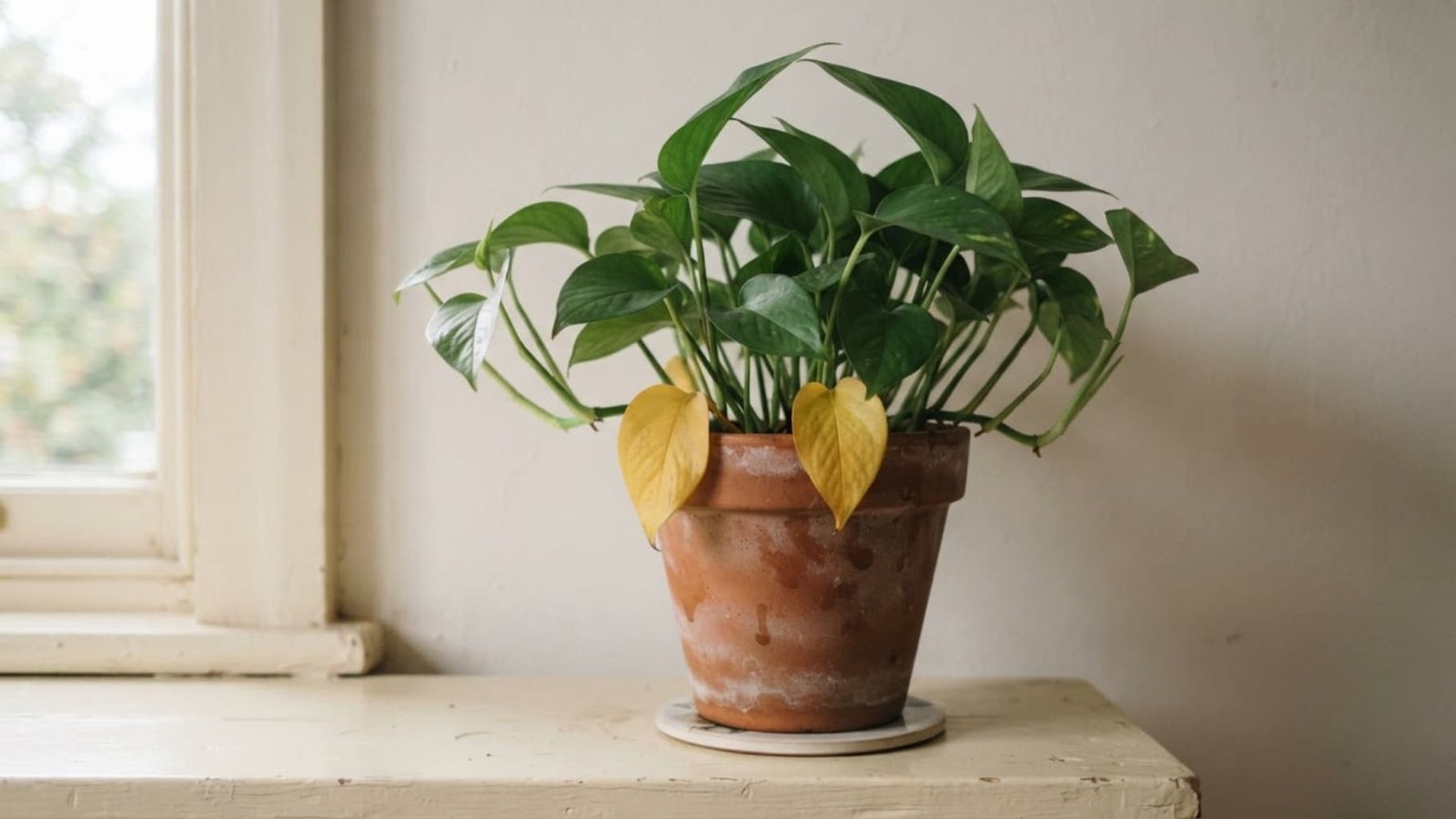
🩺 The 60-second diagnosis
Yellow leaves are almost always one of seven things: too much water, too little water, too little light, a nitrogen shortage, an iron shortage, pests, or the plant simply retiring an old leaf. Overwatering is the most common by a wide margin. The fastest way to separate the top two is to touch the leaf and then the soil — a yellow leaf that feels soft and limp sitting on wet soil means too much water, and a yellow leaf that feels dry and papery on dry soil means too little.
That one test settles more than half of all cases. The rest of this page is how to tell the remaining five apart, because they all look superficially the same from across the room and the fixes point in opposite directions. Watering a plant that is already drowning is the single most common way people finish off a plant that would have recovered.
Two things worth knowing before you start. First, a yellow leaf does not turn green again. Chlorophyll does not come back in a leaf that has lost it, so the goal is never to rescue that leaf — it is to stop the next one going the same way. Second, one yellow leaf at the very bottom of an otherwise thriving plant is usually nothing at all. Plants retire old leaves the way you shed hair.
💧 Causes 1 and 2: too much water, or too little
These two account for most yellow leaves, and people guess wrong between them constantly — usually assuming underwatering, then adding water to a plant that is already sitting in it. The tells are completely different once you know what to feel for.
| What you see | Overwatering | Underwatering |
|---|---|---|
| The leaf | Soft, limp, sometimes translucent | Dry, crisp, papery at the edges |
| Where it starts | Lower and inner leaves first | Outer edges and tips first, then the whole leaf |
| The soil | Still damp days after watering | Bone dry, often pulled away from the pot sides |
| The pot | Heavy | Noticeably light |
| The smell | Sour or musty at the soil surface | Nothing unusual |
| Leaf drop | Yellow leaves fall while still soft | Leaves go crisp and hang on |
The fix for overwatering is not to water less on the same schedule — it is to stop watering on a schedule at all. Push a finger two inches into the soil and only water when it comes out dry. Make sure the pot actually drains and is not standing in a full saucer. If the plant is badly affected, tip it out and look at the roots: healthy roots are pale and firm, rotting roots are brown, soft and smell sour. Cut the rotten ones off with clean scissors and repot into fresh, dry mix.
The fix for underwatering is a proper soak, not a splash. Water slowly until it runs freely out of the drainage holes, let it drain, then empty the saucer. Soil that has dried out completely often repels water and channels it straight down the sides — if that happens, stand the whole pot in a few inches of water for twenty minutes and let it drink from the bottom.
🔦 Cause 3: not enough light
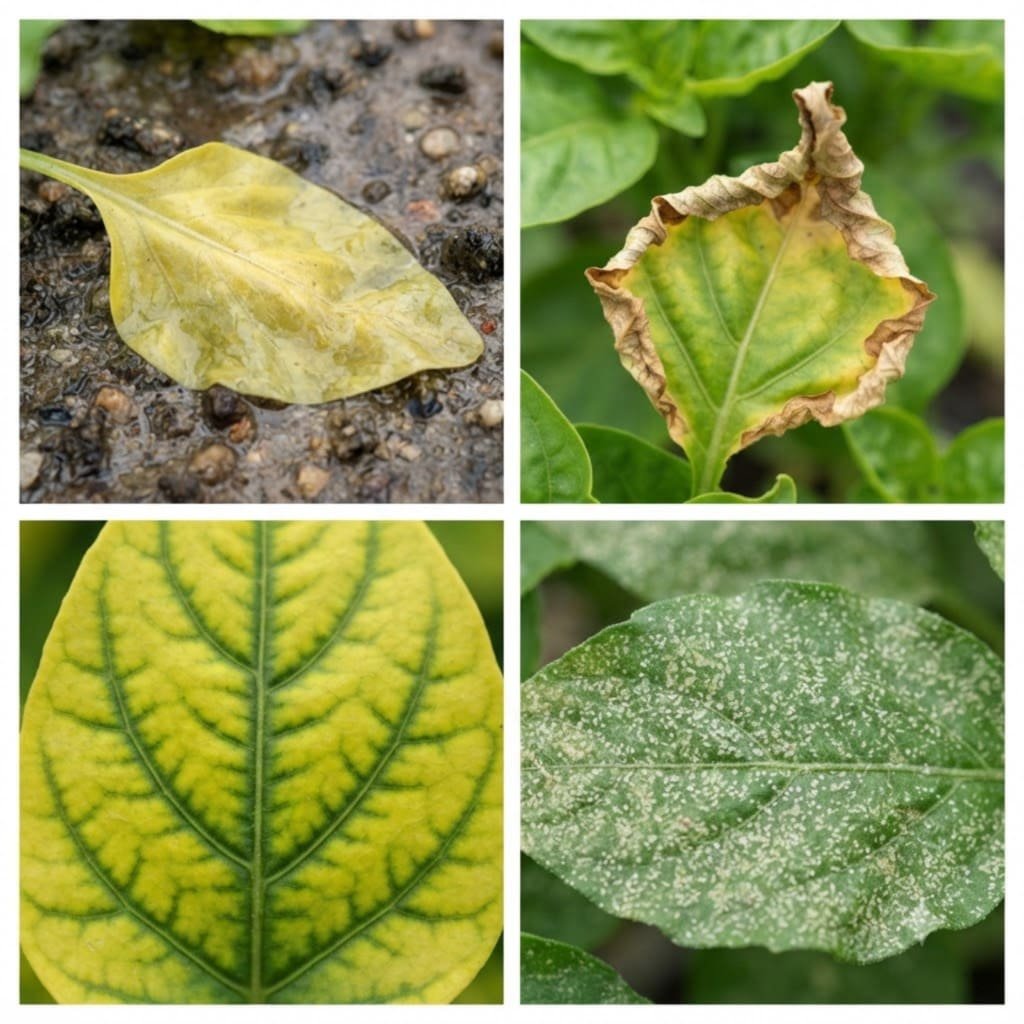
A plant that is not getting enough light starts shutting down the leaves that earn the least — the lowest ones, and the ones furthest from the window. They go pale, then yellow, then drop. The plant is not sick; it is economising.
The giveaway is the rest of the plant. Look for long bare stretches of stem between leaves, new growth that is smaller and paler than old growth, and the whole plant leaning noticeably towards the window. That combination is light, not water.
Too much direct sun produces something different and easy to distinguish: bleached, washed-out patches on the leaves that face the glass, often with dry brown centres. That is scorch, and it is localised to the exposed side rather than spread across the lower leaves.
The fix is to move the plant, but move it gradually — a plant that has been in a dim corner for months will scorch if it goes straight onto a south-facing sill. Shift it halfway for a week first.
🧪 Causes 4 and 5: nitrogen and iron
Nutrient problems have the most useful tell of all, and almost nobody knows it: which leaves go yellow tells you which nutrient is missing.
Nitrogen moves around inside a plant. When there is not enough, the plant pulls it out of the old leaves to feed the new ones — so nitrogen shortage shows up in the oldest, lowest leaves first, as an even, all-over yellowing while the new growth at the top stays green.
Iron does not move. The plant cannot rob its old leaves to supply the new ones, so iron shortage shows up in the newest leaves at the top, and it produces a very distinctive pattern: the leaf goes yellow between the veins while the veins themselves stay bright green. Once you have seen interveinal chlorosis you never mistake it for anything else.
| Pattern | Which leaves | Most likely cause | Fix |
|---|---|---|---|
| Even yellowing, whole leaf | Oldest and lowest | Nitrogen shortage | Balanced liquid feed, half strength, every 2–4 weeks in the growing season |
| Yellow between green veins | Newest, at the top | Iron shortage, often from alkaline soil or hard tap water | Chelated iron feed; check the soil is not too alkaline |
| Yellow between veins | Older, lower leaves | Magnesium shortage | Epsom salts, 1 tsp per litre, once a month |
| Overall pale and slow | All of them | Simply hungry, or long overdue a repot | Feed, and repot if roots are circling the pot |
One caution that catches people out: if you have been feeding regularly and the leaves are yellowing anyway, the answer is not more feed. Excess fertiliser burns roots and produces yellowing with brown crispy tips, plus a white crust on the soil surface. Flush the pot through with plain water several times and stop feeding for a couple of months.
🐛 Causes 6 and 7: pests, shock, and honest old age
Pests produce a speckled, stippled yellowing rather than a smooth one — a fine pale dotting across the leaf surface where sap has been drawn out cell by cell. Spider mites are the usual culprit and are almost invisible; look for fine webbing where the leaf meets the stem, and check the undersides. Sticky residue on the leaves or the surface below the plant means scale, mealybugs or aphids. Isolate the plant from your others straight away, wipe the leaves down, and treat with insecticidal soap or a diluted neem spray.
Shock is the one people worry about unnecessarily. Yellowing a few days after repotting, after moving house, after a cold delivery van, or after a sudden move from one room to another is a stress response and usually passes. Keep conditions steady, resist the urge to intervene, and do not feed a stressed plant — it cannot use it.
Old age is not a problem to solve. One or two of the oldest, lowest leaves yellowing slowly while everything above them is growing well is exactly what a healthy plant does. Snip them off and get on with your day.
Two more worth ruling out if nothing above fits: a cold draught from a window or door, which yellows the leaves on the exposed side only; and tap water, which in some areas leaves enough chlorine or fluoride to yellow sensitive plants like calatheas and spider plants. Leaving water out overnight or using filtered water settles that one.
📋 The whole thing in one table
If you read nothing else on this page, read this. Match the symptom, act on the fix.
| Symptom | Most likely cause | What to do |
|---|---|---|
| Soft yellow leaves, wet soil, heavy pot | Overwatering | Stop watering. Check drainage and roots. Water only when 2 in / 5 cm down is dry |
| Crisp yellow edges, dry soil, light pot | Underwatering | Soak thoroughly until water runs out the bottom, then drain |
| Lower leaves yellow and drop, leggy growth | Too little light | Move closer to a window, gradually |
| Bleached patches on the sun-facing side | Too much direct sun | Move back from the glass or diffuse with a sheer curtain |
| Even yellowing, oldest leaves first | Nitrogen shortage | Balanced feed at half strength, growing season only |
| Yellow between green veins, newest leaves | Iron shortage | Chelated iron; check soil pH and water hardness |
| Fine pale speckling, maybe webbing | Pests | Isolate, wipe leaves, treat with insecticidal soap or neem |
| Yellowing days after a repot or a move | Shock | Change nothing else. Wait two weeks |
| One or two lowest leaves, rest thriving | Normal ageing | Remove the leaf. Nothing is wrong |
| Yellow with brown tips, white crust on soil | Over-feeding | Flush with plain water, stop feeding for 8 weeks |
🛡️ The four reflexes that make it worse
Almost every plant that dies from yellowing dies from the response, not the cause. These are the four to resist:
- Watering because a leaf looks sad. Check the soil first, every time. A drooping plant on wet soil needs less water, not more.
- Feeding a struggling plant. Fertiliser is food for a plant that is growing. A plant with root problems cannot take it up, and the unused salts make things worse.
- Repotting immediately. Unless you have confirmed root rot, repotting adds a second stress on top of the first. Diagnose before you disturb.
- Changing several things at once. Move it, feed it, repot it and re-water it in the same afternoon and you will never know which one helped. Change one thing, then wait two weeks.
The habit that prevents most of this is unglamorous: check the soil with a finger before every single watering, and know roughly how much light your plant actually wants. Those two together prevent causes one, two and three — which is most of the list.
📱 Not sure what the plant even is?
Half of diagnosing a yellow leaf is knowing what the plant wants in the first place — a fern and a succulent showing identical yellowing need opposite responses. Garden DremiAI names any plant from a photo in a few seconds, then builds a watering and feeding schedule for it based on where it actually lives: indoor, balcony or backyard.
The reminders are the part that matters. Most yellow leaves come from watering on a fixed weekly habit rather than on what the plant needs, and a schedule that adjusts for the plant and the season quietly removes the most common cause on this page. Free on iPhone and Android, first plants free, no account needed.
Read next: how a plant identifier app actually works · the full AI backyard design guide · turn a photo into six gardens
❓ FAQ: yellow leaves on plants
Q: Why are my plant leaves turning yellow? A: Seven causes account for nearly all of it: overwatering, underwatering, too little light, nitrogen shortage, iron shortage, pests, and normal ageing. Overwatering is by far the most common. Feel the leaf and the soil first — soft leaf on wet soil means too much water, crisp leaf on dry soil means too little.
Q: Will yellow leaves turn green again? A: No. Once a leaf loses its chlorophyll it does not recover, so there is no point nursing it. Remove it and focus on stopping the next leaf going the same way. The exception is a nutrient shortage caught very early, where a leaf that is only slightly pale can green back up after feeding.
Q: Should I cut off yellow leaves? A: Yes, once a leaf is more than about half yellow. It is no longer feeding the plant and it is a target for pests and fungus. Cut cleanly at the base of the stalk with scissors rather than tearing it off. Leave partly yellow leaves alone — the plant is still reclaiming nutrients from them.
Q: Is it overwatering or underwatering? A: Lift the pot. A heavy pot with damp soil and soft, limp yellow leaves is overwatering. A light pot with dry soil and crisp, papery yellow edges is underwatering. Overwatering also starts at the lower and inner leaves, while underwatering starts at the edges and tips.
Q: Why are the leaves yellow but the veins still green? A: That pattern is called interveinal chlorosis and it usually means an iron shortage, especially if it appears on the newest leaves at the top of the plant. It is common with hard tap water or alkaline soil. If it appears on older, lower leaves instead, magnesium is the more likely cause.
Q: Can too much sun turn leaves yellow? A: Yes, but it looks different. Sun scorch gives bleached, washed-out patches on the leaves facing the light, often with dry brown centres, and only on the exposed side. Yellowing that starts at the bottom of the plant and spreads evenly is a light shortage, not an excess.
Q: How long before the plant recovers? A: If the cause was watering or light, expect new growth to come through normally within two to four weeks, though existing yellow leaves will not change. Root rot takes longer and may need several months. Change one thing at a time and wait a fortnight before judging whether it worked.
🧑💻 About the Author
Garden DremiAI — AI plant care & yard design
Written by the maker of Garden DremiAI, an independent studio. We built the plant care side of the app after watching people water on a fixed weekly habit and lose plants to it, so the diagnostic order on this page is the same one the app uses: water first, then light, then nutrients, then pests. The advice here covers common houseplants and garden plants and is not a substitute for a professional plant-health diagnosis where a valuable or unusual specimen is involved.
Questions: support@gardenyarddesign.com