How Often to Water Plants: A Schedule by Plant Type
There is no once-a-week rule. Here are real intervals for 20 plants, and the two tests that beat any schedule.
Garden DremiAI: AI Plant Care & Yard Design
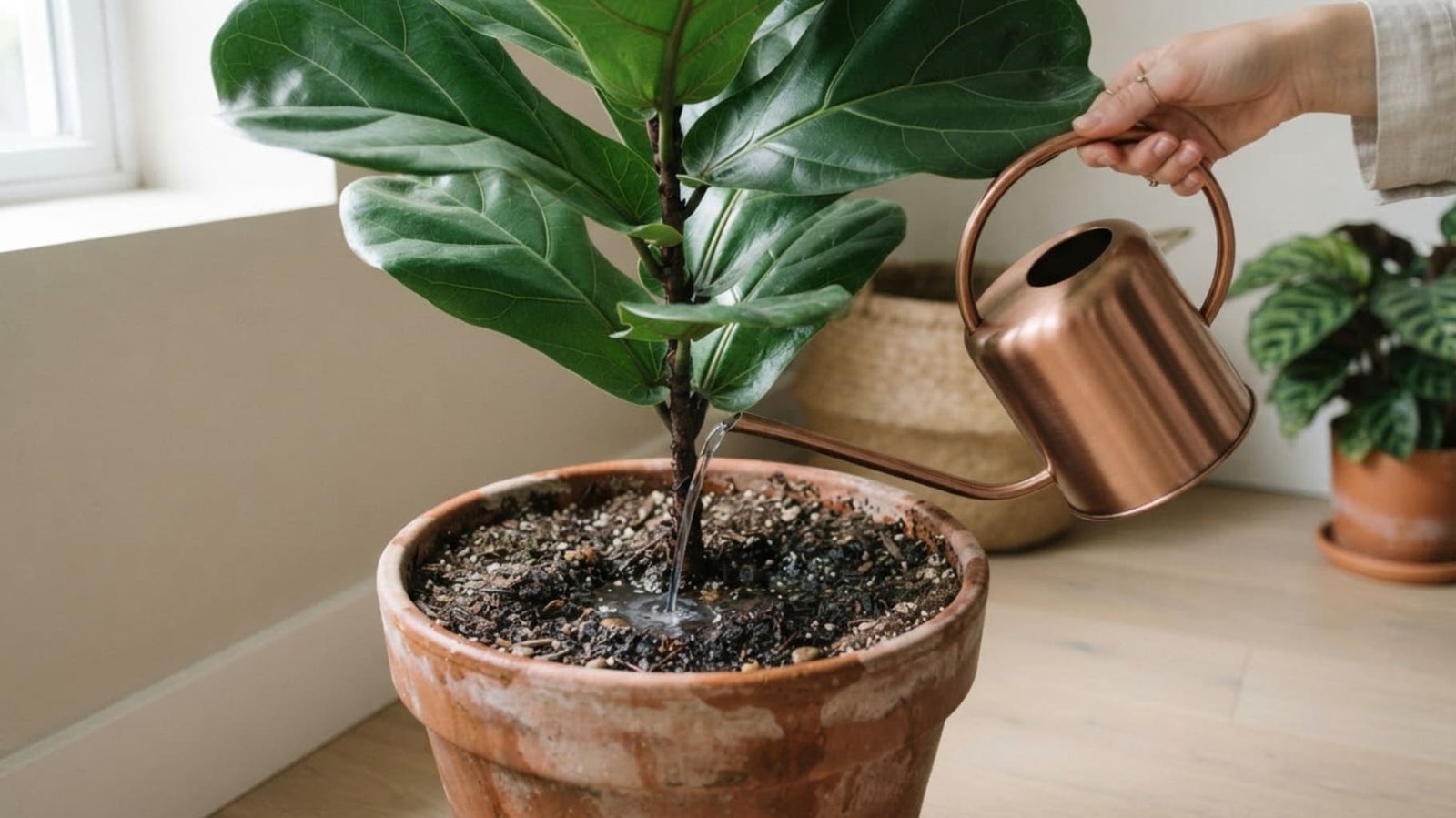
🚿 The honest answer first
Most houseplants want water every 7 to 14 days in summer and every 2 to 4 weeks in winter — but that range is so wide it is nearly useless on its own, because the right interval depends on the plant, the light it sits in, the pot it is in and the time of year. A peace lily wants water every 5 days. An aloe in the same room wants it every 3 weeks. The reliable rule is not a day of the week: push a finger two inches into the soil, and water only when it comes out dry.
The reason “once a week” persists is that it is easy to remember, not that it is right. It is also the single most common way people kill houseplants — watering a plant on Sunday whether or not it needs it, until the roots sit permanently wet and rot. Overwatering kills far more plants than neglect does.
So this page gives you both. The tests that tell you what an individual plant needs today, and a table of real starting intervals for 20 common plants split by season, so you have somewhere sensible to begin.
🖐️ The two tests that beat any schedule
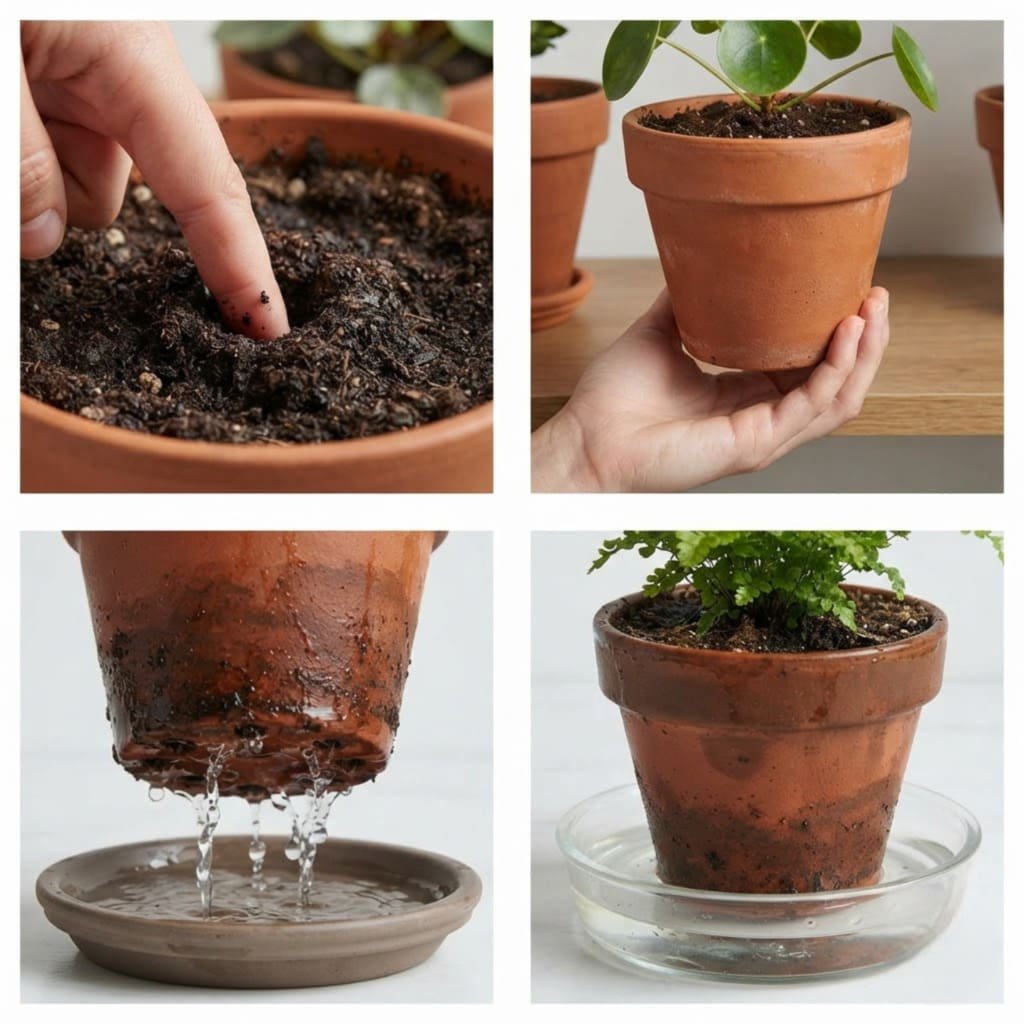
The finger test. Push a finger into the soil up to the second knuckle, about two inches or five centimetres. Dry the whole way down means water now. Damp at that depth means wait, whatever the calendar says. For succulents and cacti, go further — they want the soil dry throughout, not just at the top.
The pot weight test. Lift the pot right after you water it, then lift it again a week later. The difference is unmistakable once you have felt it, and after two or three cycles you can tell whether a plant needs water in about a second without touching the soil at all. This is the test experienced growers actually use.
A note on moisture meters: the cheap probe type measures electrical conductivity rather than moisture, so fertiliser salts in the soil can make dry soil read as wet. They are better than nothing on very large pots where you cannot reach the root zone, but do not trust one over your own finger.
Both tests answer the only question that matters — does this plant need water today — which no fixed schedule can. A schedule is for reminding you to check. It is not for telling you to pour.
📊 How often to water 20 common plants
Starting intervals for average indoor conditions in bright indirect light. Treat them as a first guess to adjust from, not a rule — and always confirm with the finger test before watering.
| Plant | Summer | Winter | Watering style |
|---|---|---|---|
| Peace lily | 5–7 days | 7–10 days | Keep lightly moist; droops dramatically when thirsty and recovers fast |
| Boston fern | 2–3 days | 5–7 days | Never let it dry out; the thirstiest plant on this list |
| Calathea / prayer plant | 5–7 days | 7–10 days | Evenly moist, filtered or stood water |
| Anthurium | 7 days | 10–14 days | Let the top inch dry between waterings |
| African violet | 7 days | 10–14 days | Bottom water only; wet leaves spot and rot |
| Orchid (phalaenopsis) | 7 days | 10–14 days | Soak the bark, drain fully, never leave it standing |
| Monstera | 7–10 days | 14–21 days | Top 2 in dry before watering |
| Pothos | 7–10 days | 14–17 days | Very forgiving; droops as a clear warning |
| Philodendron | 7–10 days | 14 days | Top 2 in dry before watering |
| Spider plant | 7–10 days | 10–14 days | Sensitive to fluoride; use filtered or stood water |
| Fiddle leaf fig | 7–10 days | 14 days | Hates inconsistency more than it hates either extreme |
| Rubber plant | 7–10 days | 14 days | Top 2 in dry; wipe the leaves occasionally |
| Ficus benjamina | 7–10 days | 14 days | Drops leaves if you change its routine or its position |
| Dracaena | 10–14 days | 21 days | Sensitive to fluoride; let the top third dry |
| ZZ plant | 14–21 days | 4–6 weeks | Stores water in its rhizomes; nearly impossible to underwater |
| Snake plant | 14–21 days | 4–6 weeks | Dry throughout before watering; the classic overwatering casualty |
| Aloe vera | 14–21 days | 4–6 weeks | Soak fully, then leave it completely alone |
| Echeveria and other succulents | 14–21 days | 3–4 weeks | Soak and dry; never little and often |
| Cactus | 2–3 weeks | 6–8 weeks, or none | Many prefer a completely dry winter rest |
| Basil and soft herbs in pots | 1–2 days | Not usually overwintered | Wilts fast and recovers fast; keep evenly moist |
If your plant is not listed, find the closest match by leaf type. Thick, fleshy, waxy leaves store water and want long gaps. Thin, soft, papery leaves lose water fast and want short ones. That single heuristic gets you close on almost anything.
🌦️ The five things that change the interval
The same plant in two different rooms can want water twice as often in one as the other. These are the five factors, in order of how much they matter:
| Factor | Waters more often | Waters less often |
|---|---|---|
| Light | Bright light — more growth, more water used | Low light — growth slows, soil stays wet for days |
| Season | Spring and summer, actively growing | Autumn and winter, often half the summer rate or less |
| Pot material | Terracotta — porous, breathes, dries fast | Plastic and glazed ceramic — hold moisture much longer |
| Pot size | Small pot, or roots filling the pot | Large pot with plenty of spare soil |
| Air | Warm, dry, moving air near a radiator or vent | Cool, still, humid rooms such as bathrooms |
The seasonal shift is the one people miss. A plant that genuinely needed water every seven days in July needs it every two or three weeks in January, because there is less light, growth has slowed and the roots are drinking far less. Carrying a summer routine into winter is one of the most reliable ways to produce root rot, and it happens every year.
It is also the most common cause behind yellowing leaves — our guide to why plant leaves turn yellow covers how to tell overwatering from underwatering when the damage has already started.
🏠 Same plant, three different schedules
Where a plant lives changes its needs as much as what species it is. The same pot of pothos wants a genuinely different routine indoors, on a balcony, and planted out in a bed.
| Indoors | Balcony or patio | Planted in the ground | |
|---|---|---|---|
| Typical summer interval | 7–14 days | Daily to every 2 days in a pot | Weekly at most, once established |
| Why | Stable temperature, no wind, no rain | Sun and wind strip moisture from pots very fast | Deep roots reach moisture the surface has lost |
| Main risk | Overwatering | Drying out on a hot day | Overwatering new plantings |
| Best time to water | Any time | Early morning | Early morning |
For anything newly planted in open ground, water deeply and less often rather than lightly and often. A long slow soak once a week drives roots downward looking for moisture; a daily sprinkle keeps them at the surface where they dry out and stay dependent on you. Established shrubs and trees usually need nothing at all except in genuine drought.
💦 How to water, which matters as much as when
Getting the timing right and then watering badly wastes the effort. Four things:
- Soak, do not splash. Water slowly until it runs freely out of the drainage holes. A small splash wets only the top inch, and the roots that matter are at the bottom of the pot.
- Empty the saucer. Give it thirty minutes to drain, then tip out whatever is standing. A pot sitting in water is a pot with drowning roots, and this one habit prevents most root rot.
- Bottom water if the soil has gone hydrophobic. Soil that has dried out completely repels water and channels it straight down the sides of the pot, so it looks watered and is not. Stand the pot in a few inches of water for twenty to thirty minutes and let it drink from below.
- Water the soil, not the plant. Wet foliage overnight invites fungal problems, and some plants — African violets especially — mark permanently where water sits on the leaves.
One thing that is not worth worrying about: tap water is fine for the large majority of plants. The exceptions are the fluoride-sensitive ones — spider plants, dracaenas, calatheas — which do better on filtered water or tap water left standing overnight. If you have very hard water and you see a white crust building on the soil surface, flush the pot through with plain water a few times a year.
❌ The five watering mistakes
- Watering on a fixed day. The calendar does not know how much light your plant got this week. Use the schedule as a prompt to check, never as an instruction to pour.
- Little and often. Frequent small amounts keep the top wet and the bottom dry, so roots stay shallow and the plant never fully drinks. Fewer, heavier waterings beat more, lighter ones for nearly everything.
- Not changing anything in winter. The single most common cause of root rot. Growth slows, water use drops, the interval should roughly double.
- Watering a drooping plant without checking. Drooping means stress, not necessarily thirst — an overwatered plant droops too, on wet soil. Check before you act, or you will finish it off.
- Leaving it in a decorative pot with no drainage. Water goes in and cannot leave. If you like the outer pot, keep the plant in its plastic nursery pot inside it and lift it out to water.
If you only change one habit, make it the first one. Almost every watering problem on this list traces back to pouring on a schedule instead of checking a plant.
📱 A schedule that adjusts itself
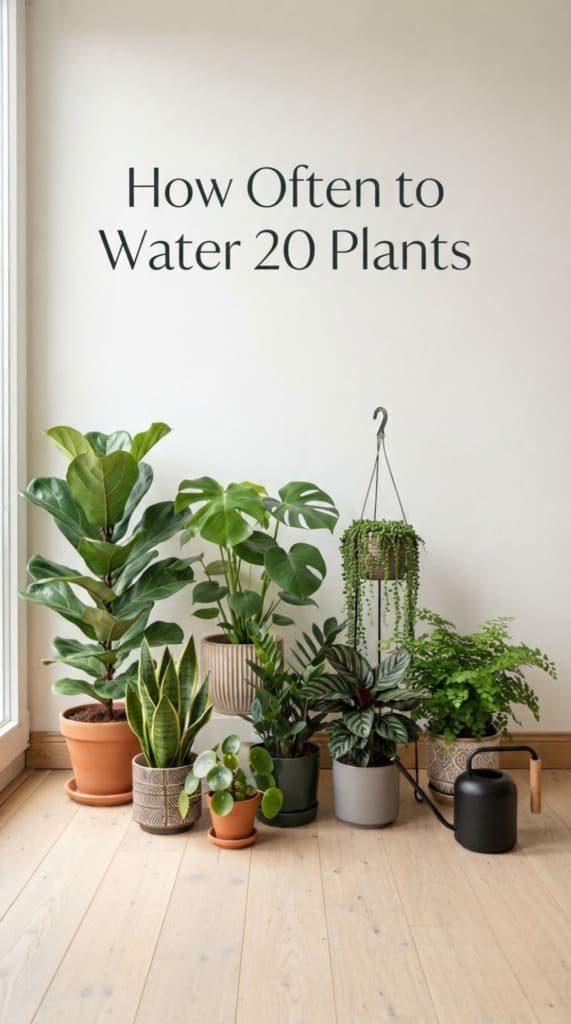
The awkward part of everything above is that the correct answer changes with the plant, the season and the room — which is exactly the kind of thing worth handing to something that keeps track for you. Garden DremiAI identifies each plant from a photo, then builds its watering interval from the species and from where you tell it the plant lives: indoor, balcony or backyard. It shifts the interval as the seasons change rather than repeating a summer routine into December.
The reminders read as icons and numbers — 3d means water in three days — so the whole thing works whatever language you read in. It is also the same app that redesigns a yard from a photo, so the plants you are keeping alive and the garden you are planning sit in one place. Free on iPhone and Android, first plants free, no account needed.
Read next: why plant leaves turn yellow · how a plant identifier app works · low-maintenance plants for a backyard · turn a photo into six gardens
❓ FAQ: how often to water plants
Q: How often should I water my plants? A: Most houseplants want water every 7 to 14 days in summer and every 2 to 4 weeks in winter, but it varies enormously by species — a fern wants water every 2 to 3 days and a snake plant every 3 weeks. Rather than following a fixed day, push a finger two inches into the soil and water only when it comes out dry.
Q: Should I water my plants once a week? A: Not as a rule. Once a week suits a handful of plants and is far too often for succulents, snake plants and ZZ plants, and not nearly often enough for ferns. Use a weekly reminder to check the soil rather than to water, and only pour if the soil is actually dry at depth.
Q: How do I know if a plant needs water? A: Two tests. Push a finger two inches into the soil — dry means water, damp means wait. Or lift the pot: a recently watered pot is noticeably heavy and a dry one is light, and after a few cycles you can judge it instantly. Drooping is not a reliable signal, because overwatered plants droop too.
Q: How often should I water plants in winter? A: Roughly half as often as in summer, sometimes less. There is less light, growth slows and roots drink far less, so a plant on a 7-day summer interval often moves to 14 to 21 days. Carrying a summer routine into winter is the most common cause of root rot.
Q: Is it better to water a little every day or a lot less often? A: A lot, less often, for almost every plant. Frequent small amounts wet only the top inch, so roots stay shallow and never fully drink. Water slowly until it runs out of the drainage holes, then leave it alone until the soil is dry at depth again.
Q: How often should I water outdoor potted plants? A: Far more often than indoor ones — daily, or even twice daily in a hot spell, because sun and wind strip moisture from containers very quickly. Water early in the morning. Plants growing in open ground need much less, usually a deep soak once a week while establishing and little afterwards.
Q: Can I use tap water for my plants? A: For most plants, yes. The exceptions are fluoride-sensitive ones such as spider plants, dracaenas and calatheas, which do better with filtered water or tap water left standing overnight. If you have very hard water and see white crust forming on the soil, flush the pot with plain water a few times a year.
🧑💻 About the Author
Garden DremiAI — AI plant care & yard design
Written by the maker of Garden DremiAI, an independent studio. We built the app’s reminder engine around the same logic as this page: the species sets the starting interval, then light, location and season adjust it. The figures above are starting points for average indoor conditions — your own room, pot and light will move them, which is why every one of them comes with a finger test attached.
Questions: support@gardenyarddesign.com