Low Maintenance Backyard Plants: 24 Easy Picks and 5 Planting Ideas
Twenty-four plants that look after themselves once established, sorted by sun, shade and dry soil, plus five planting ideas that replace weekly work.
Garden DremiAI: AI Yard & Landscape Design
🎯 What low maintenance really means
No plant is low maintenance everywhere. Lavender that thrives on neglect in a sunny gravel bed will rot in wet shade. The easiest garden is the one where every plant suits its spot, so the plants below are sorted by conditions first.
Water in the tables means the need once established, usually after the first full growing season. Every new plant needs regular watering while its roots grow.
🌿 24 low maintenance backyard plants
Sunny, dry spots
| Plant | Light | Water | Why it is easy | Watch out |
|---|---|---|---|---|
| Lavender Lavandula | Full sun | Low | Thrives on neglect in free-draining soil; one trim after flowering. | Rots in wet clay. |
| Russian sage Salvia yangii | Full sun | Low | Long silver-blue flowering; cut back once in spring. | Flops in rich, wet soil. |
| Catmint Nepeta | Full sun | Low | Flowers for months; shear after the first flush for more. | Cats may roll in it. |
| Autumn Joy sedum Hylotelephium | Full sun | Low | Succulent leaves, late flowers, winter seedheads. | Splays open in rich soil. |
| Yarrow Achillea | Full sun | Low | Takes poor, dry soil and heat. | Some types spread fast. |
| Coneflower Echinacea | Full sun | Low | Pollinator magnet; seedheads feed birds. | Short-lived in wet winters. |
| Black-eyed Susan Rudbeckia | Full sun | Low to medium | Long late-summer colour. | Self-seeds freely. |
| Daylily Hemerocallis | Full sun to part shade | Low | Survives almost anything. | Each flower lasts one day. |
| Rosemary Salvia rosmarinus | Full sun | Low | Evergreen, edible, drought tolerant. | Can die in hard, wet winters. |
| Yucca Yucca filamentosa | Full sun | Very low | Evergreen architecture for dry gravel. | Sharp leaf tips near paths. |
| Creeping thyme Thymus serpyllum | Full sun | Low | Fills gaps between paving and takes light foot traffic. | Needs sharp drainage. |
Ornamental grasses
| Plant | Light | Water | Why it is easy | Watch out |
|---|---|---|---|---|
| Feather reed grass Calamagrostis ‘Karl Foerster’ | Full sun | Low to medium | Upright, tidy, one cut in late winter. | Little interest in deep shade. |
| Switchgrass Panicum virgatum | Full sun | Low | Handles both wet and dry soil. | Large types need space. |
| Little bluestem Schizachyrium scoparium | Full sun | Low | Copper autumn colour in poor, dry soil. | Leans in rich soil. |
| Japanese forest grass Hakonechloa macra | Part shade | Medium | One of the few grasses that likes shade. | Slow to fill in. |
Shrubs
| Plant | Light | Water | Why it is easy | Watch out |
|---|---|---|---|---|
| Smooth hydrangea ‘Annabelle’ Hydrangea arborescens | Sun to part shade | Medium | Flowers on new wood, so pruning mistakes do not matter. | Wilts in drought. |
| Ninebark Physocarpus | Sun to part shade | Low | Tough, coloured foliage, no regular pruning. | Can get mildew in still air. |
| Japanese spirea Spiraea japonica | Full sun | Low | Compact; a quick trim after flowering. | Invasive in parts of the US; check locally. |
| Low juniper Juniperus, spreading types | Full sun | Very low | Evergreen ground cover for slopes. | Dislikes shade and wet roots. |
Shade
| Plant | Light | Water | Why it is easy | Watch out |
|---|---|---|---|---|
| Hosta Hosta | Shade to part shade | Medium | Bold leaves, very long-lived. | Slugs and deer. |
| Ferns e.g. lady fern, Christmas fern | Shade | Medium | No flowers to deadhead; texture all season. | Need moisture to look good. |
| Coral bells Heuchera | Part shade | Low to medium | Coloured foliage all year in mild climates. | Heaves out of the soil in frost. |
| Hellebore Helleborus | Shade to part shade | Low | Evergreen, flowers in late winter. | Toxic if eaten. |
| Barrenwort Epimedium | Dry shade | Low | One of the few plants for dry soil under trees. | Slow to establish. |
🪴 5 low maintenance backyard planting ideas
1. Gravel garden with grasses
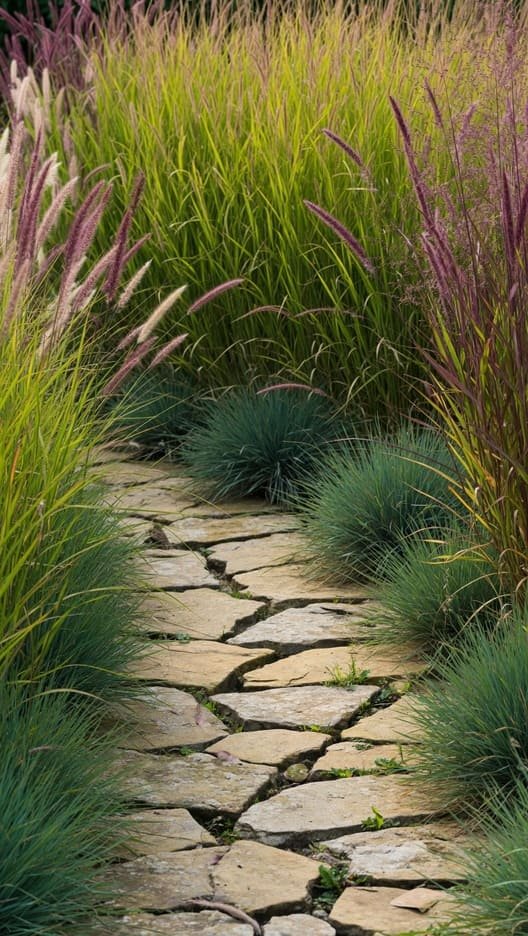
Swap a lawn or bare bed for gravel over landscape fabric, then plant grasses, lavender and sedum through it. No mowing, little weeding, and rain soaks straight in.
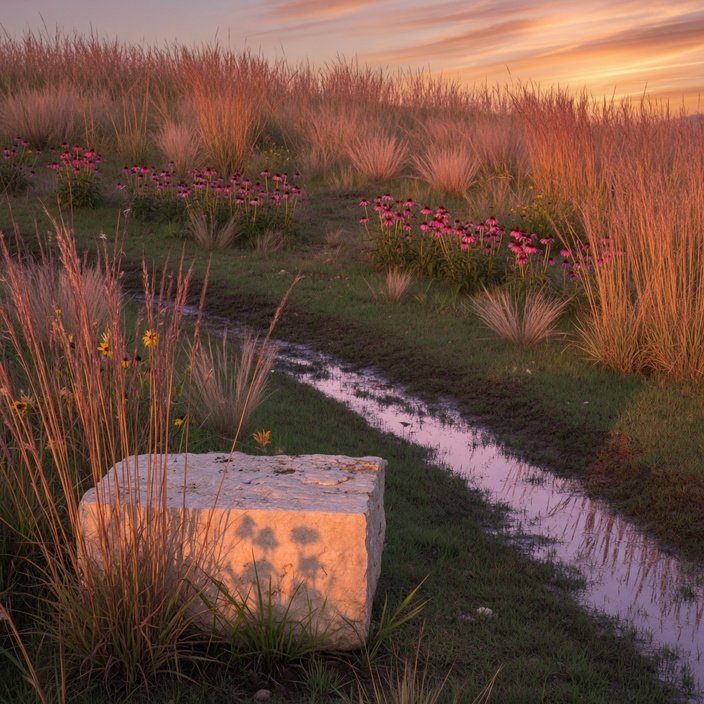
2. Prairie meadow instead of lawn
Switchgrass, little bluestem, coneflower and rudbeckia, cut down once in late winter. Keep one mown path through it so it looks intended.
3. Dry desert garden
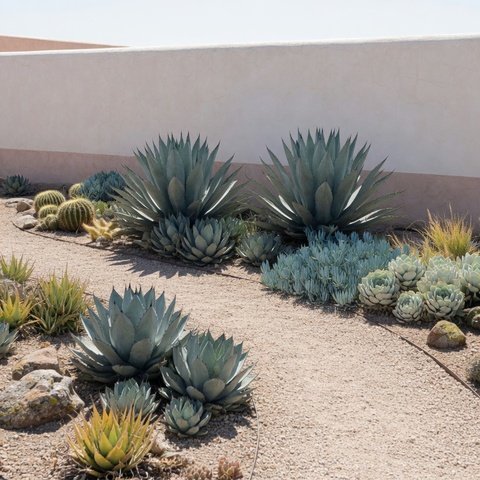
For hot, dry yards: agave, yucca and succulents spaced out in decomposed granite. Water only while the plants establish.
4. Shade woodland under trees
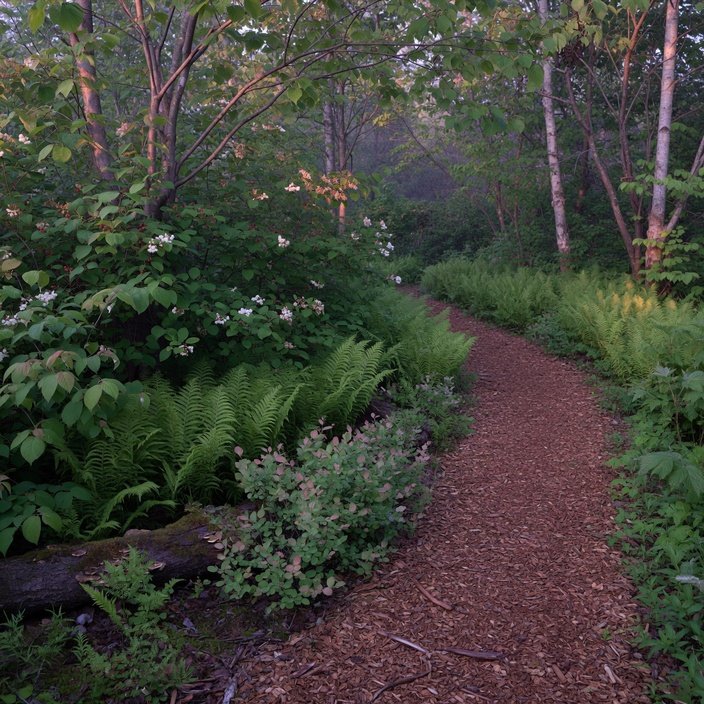
Where grass gives up under trees, plant ferns, hellebores and epimedium and cover the ground with bark. Fallen leaves become the mulch.
5. Raked gravel courtyard
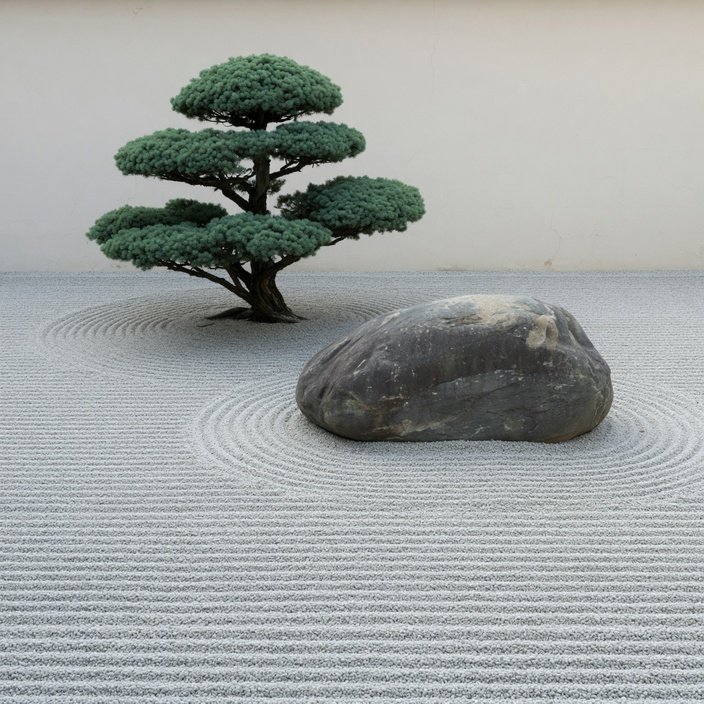
For a small yard or side passage: raked gravel, one or three boulders and a single shaped tree. A rake every week or two is the only routine job.
✂️ Six habits that keep any backyard easy
Mulch every bare patch. 5 to 8 cm (2 to 3 in) of bark or gravel holds moisture and stops most weed seedlings.
Plant in groups. Three, five or seven of one plant look calmer than one of everything and are easier to care for.
Water deeply, less often. A drip line on a timer beats a hose: roots grow deeper and the leaves stay dry.
Edge the beds. Steel, brick or stone edging stops lawn creeping into the borders.
Choose the final size. A shrub that fits its space never needs cutting back.
Skip the needy plants. Anything that needs staking, spraying or dividing every year is not low maintenance. For pots and houseplants, see how often to water plants.
📱 See a low maintenance design on your own yard
Take one photo of your backyard and try the desert, Mediterranean, modern or woodland style in Garden DremiAI to see a lower-work version of your real space. Then point the camera at any plant you already have to get its name and a simple care plan.
Free to download. New users get a welcome offer for a limited time.
📚 Read next
❓ FAQ: low maintenance backyard plants
Q: What is the most low maintenance plant for a backyard?
A: It depends on the light. In full sun, lavender, sedum and ornamental grasses need almost nothing once established. In shade, ferns, hellebores and epimedium are the easiest. A plant that suits your conditions will always be lower maintenance than a tough plant in the wrong spot.
Q: What can I plant instead of grass?
A: Gravel planted with drought-tolerant perennials, a meadow of grasses and wildflowers cut once a year, low ground covers such as creeping thyme in sun, or paving with planting pockets.
Q: Are native plants always low maintenance?
A: Not always, but natives suited to your soil and rainfall usually need less water and feeding than imported plants. Check that anything you plant is not invasive in your region.
Q: How do I keep a backyard low maintenance?
A: Plant in groups, cover every patch of bare soil with mulch, water with a drip line on a timer, edge the beds with steel or stone, and choose plants that reach their final size without pruning.
🧑💻 About the Author
Garden DremiAI: AI yard design & plant care
Written by the maker of Garden DremiAI, an independent studio. Japanese is the style our users generate most and copy least successfully, and the pattern is always the same: too many objects, not enough empty ground. Plant choices should be confirmed locally; species suited to one climate frequently fail in another.
Questions: support@gardenyarddesign.com