Brown Tips on Plant Leaves: 7 Causes and How to Fix Them
Almost always humidity, water quality or feeding — not disease. How to tell which, and how to trim them properly.
Garden DremiAI: AI Plant Care & Yard Design
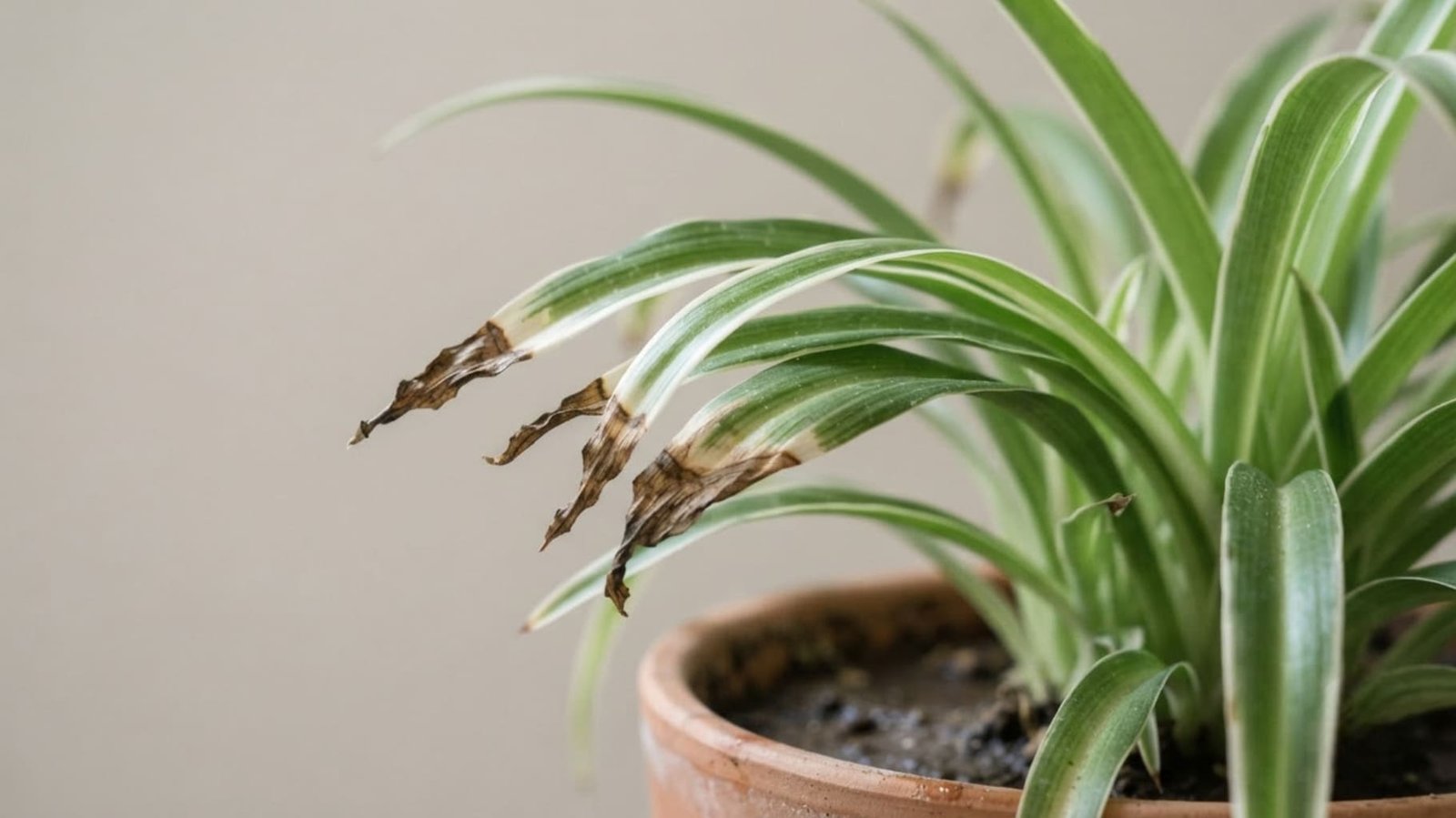
🍂 The short answer
Brown crispy tips are almost always one of three things: air that is too dry, inconsistent watering, or minerals building up in the soil from tap water and fertiliser. They are rarely a disease and rarely serious. The quickest way to narrow it down is to look at what else is happening — brown tips on a spider plant, dracaena or calathea usually means tap water; brown tips with a white crust on the soil surface means fertiliser salts; brown tips with no other symptoms usually means dry air or letting the plant dry out too far between waterings.
The important thing to know before you start is that a brown tip never turns green again. Dead leaf tissue is dead. So the goal is not to heal what you are looking at — it is to stop the browning advancing and to keep new leaves clean. Judge whether you have fixed it by watching new growth, not old leaves.
It is also worth being honest that some plants simply do this. Spider plants, dracaenas, calatheas, prayer plants and peace lilies get brown tips in ordinary homes with ordinary care, and a small amount is normal rather than a sign you are doing something wrong.
🔎 First: what shape is the browning?
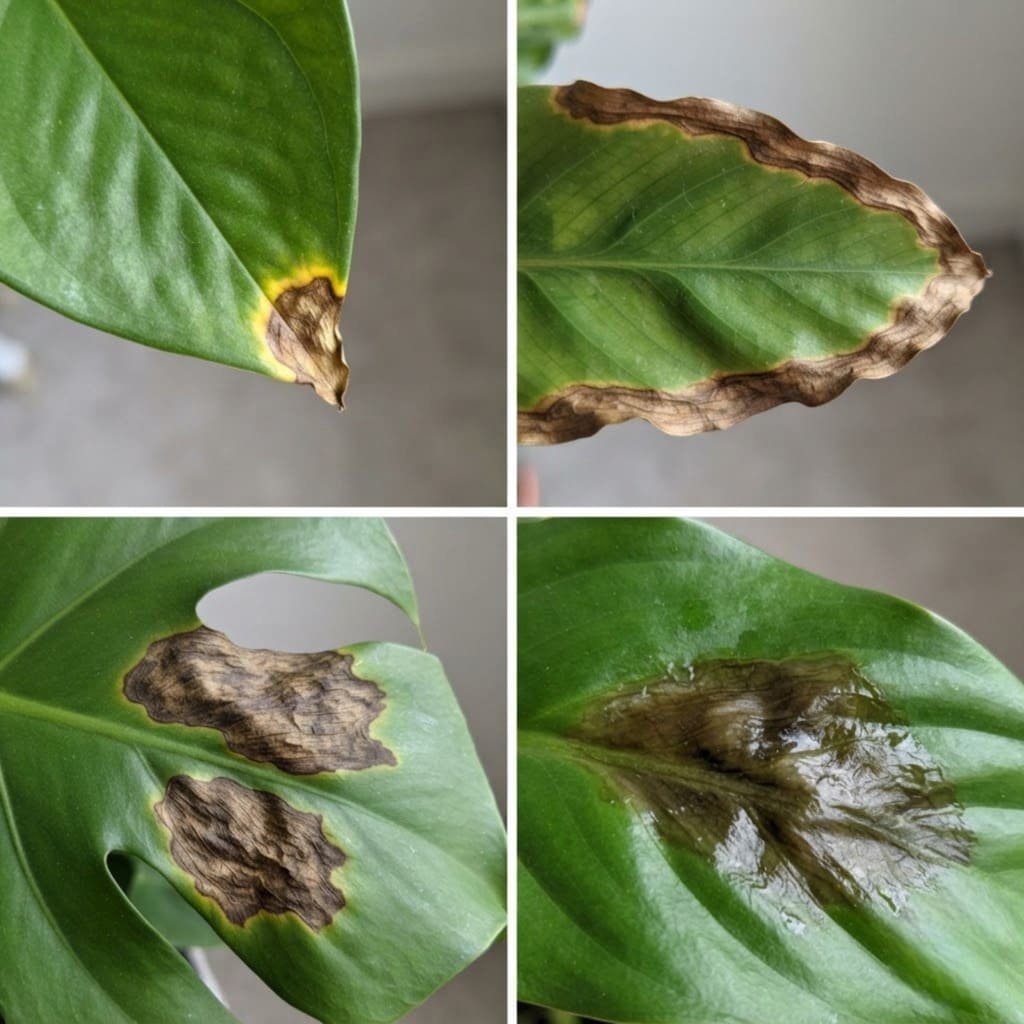
Where the brown appears narrows the cause faster than anything else:
| Pattern | Most likely cause | Serious? |
|---|---|---|
| Just the very tip, dry and crisp | Low humidity, or drying out between waterings | No |
| Tip plus a thin yellow halo | Same, slightly further along | No |
| Brown edges all around the margin | Mineral or fertiliser salt build-up | No, but act on it |
| Dry brown patches in the leaf middle | Sun scorch, or cold draught damage | No |
| Soft dark brown patches, mushy | Overwatering or fungal — a different problem | Yes |
| Whole lower leaves browning off | Normal ageing if the plant is otherwise growing | No |
If the brown is soft rather than crisp, you are dealing with too much water rather than too little — how to save an overwatered plant covers that case, and it needs acting on quickly.
🧾 The seven causes
1. Dry air. The most common cause for tropical houseplants, and worst in winter when heating runs. Most homes sit around 30–40% relative humidity; calatheas, ferns, marantas and alocasias want considerably more. The tips are the furthest point from the roots, so they dry first.
2. Inconsistent watering. Not underwatering exactly — letting the plant swing between soaking and bone dry. Each time it dries too far, the tips die back a little. A plant watered thoroughly and on time gets brown tips far less than one watered erratically, even if the average amount is identical.
3. Tap water. Fluoride and chlorine accumulate in leaf tips, and a handful of species are notably sensitive: spider plants, dracaenas, cordylines, calatheas, prayer plants and peace lilies. If your brown tips are on one of those and everything else looks healthy, this is very likely your answer.
4. Too much fertiliser. Excess salts burn root tips, which shows up as browning at the leaf margins. The tell is a white or yellowish crust on the soil surface or around the drainage holes. This is the one people cause by trying to help.
5. Root problems. A pot-bound plant, or one with rot, cannot move enough water to the leaf extremities however wet the soil is. If the plant has not been repotted in two or more years, or roots are circling out of the drainage holes, check there.
6. Heat and draughts. A radiator directly beneath, a heating vent, or a cold draught from a door will crisp the tips on the exposed side of the plant only. The one-sided pattern is the giveaway.
7. Age. Older lower leaves brown off and die as a plant grows. If it is only the oldest leaves and the new growth is clean, nothing is wrong.
🛠️ What to actually do
| Cause | Fix | How long before new leaves are clean |
|---|---|---|
| Dry air | Group plants together, stand pots on a pebble tray, or run a humidifier | 3–6 weeks |
| Inconsistent watering | Water thoroughly on a check-the-soil basis, never a fixed day | 4–8 weeks |
| Tap water | Filtered or distilled water, or tap water left standing overnight | 4–8 weeks |
| Fertiliser salts | Flush the pot: run plain water through for several minutes, drain fully. Stop feeding 2 months | 4–8 weeks |
| Root bound or rot | Repot into fresh mix, one pot size up, or trim rot and go one size down | 6–12 weeks |
| Heat or draught | Move the plant away from the radiator, vent or door | Immediately, on new growth |
| Age | Nothing. Remove the spent leaves | n/a |
Flushing a pot is worth doing annually anyway if you use tap water or feed regularly. Stand the plant in a sink and run water slowly through the soil for two or three minutes, letting it drain out of the bottom the whole time. That washes accumulated salts out rather than leaving them to concentrate.
💨 About misting — it does not work
Nearly every page on this subject recommends misting, and it is the one piece of advice worth ignoring. Misting raises the humidity immediately around a leaf for a few minutes and then it evaporates. Brown tips are caused by sustained ambient humidity over days and weeks, and a spray twice a day does not change that in any measurable way.
It is not merely useless. Water sitting on leaves overnight encourages fungal spotting and bacterial problems, and on fuzzy-leaved plants such as African violets it marks the leaves permanently.
What actually raises humidity, in ascending order of effectiveness:
- Group plants together. Free. Plants transpire, so a cluster creates a genuinely more humid pocket of air than a plant standing alone.
- Pebble tray. A shallow tray of pebbles with water below the pot base — the pot must sit on the pebbles, not in the water. Modest but real.
- Move it to the bathroom or kitchen. Free, and often the single most effective change, if there is enough light.
- A humidifier. The only method that reliably shifts a room from 35% to 55%. If you own genuinely humidity-hungry plants, this is the answer and everything else is a compromise.
✂️ How to trim brown tips properly
Trimming is cosmetic — it does not help the plant, and it does not stop the cause. But it looks far better, and there is a right way to do it that almost nobody explains.
- Use clean, sharp scissors. Wipe the blades with rubbing alcohol first. Blunt scissors crush the tissue and cause fresh browning along the cut.
- Leave a thin brown margin. This is the important one. Cut just outside the brown, leaving a sliver of the dead tissue in place. Cutting back into healthy green creates a new wound, and that wound browns — so cutting into green guarantees you will be trimming again in a fortnight.
- Follow the leaf’s natural shape. Cut to a point on a pointed leaf, a curve on a rounded one. A flat straight cut across a leaf tip looks worse than the brown did.
- Remove the whole leaf if it is more than about half brown. At that point it is not contributing anything and is a site for pests and fungus. Cut at the base of the stalk.
Trim after you have identified and fixed the cause, not before. Otherwise you are tidying up the symptom while the thing producing it carries on.
📱 Know the plant, know its tolerance
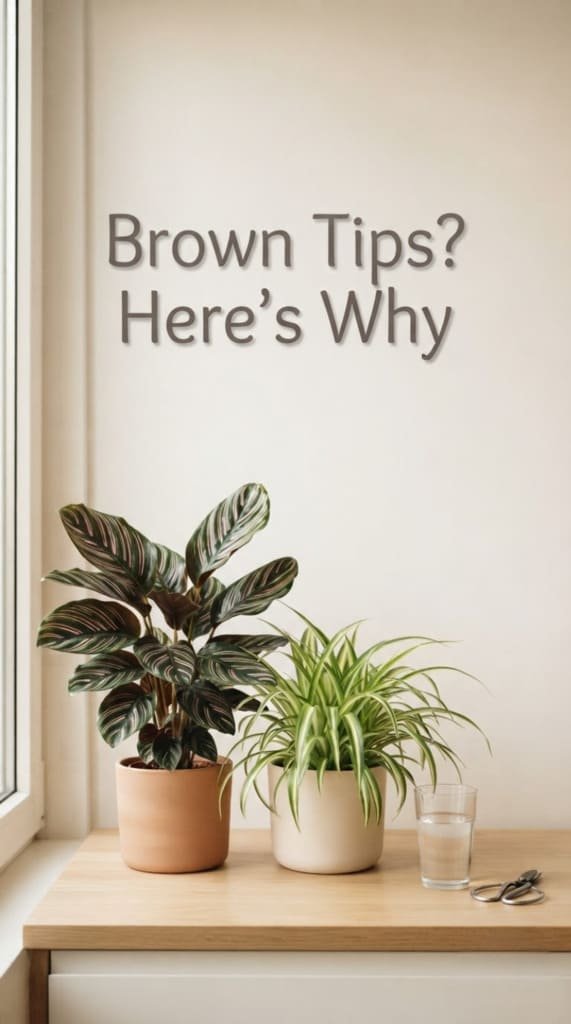
Half of diagnosing brown tips is knowing what you are holding. A calathea with brown tips in a dry room is behaving exactly as calatheas do and needs humidity. A pothos with brown tips is unusual and points at water quality or feeding instead. Same symptom, different meaning, entirely because of the species.
Garden DremiAI names any plant from a photo and builds its care plan from there — watering interval, light, feeding and humidity needs, adjusted for whether the plant lives indoors, on a balcony or outside. The reminders keep watering consistent, which removes the second most common cause on this page. Free on iPhone and Android, first plants free, no account needed.
Read next: why plant leaves turn yellow · how to save an overwatered plant · how often to water plants · how a plant identifier app works
❓ FAQ: brown tips on plant leaves
Q: Why do my plant leaves have brown tips? A: Usually one of three things: dry air, inconsistent watering, or mineral build-up from tap water and fertiliser. Brown tips on a spider plant, dracaena or calathea most often mean tap water. Brown edges with a white crust on the soil mean fertiliser salts. Brown tips with no other symptom usually mean humidity.
Q: Should I cut off brown tips? A: You can, but it is cosmetic only — it does not help the plant or stop the cause. Use clean sharp scissors, follow the leaf’s natural shape, and leave a thin sliver of brown in place. Cutting back into green tissue creates a fresh wound that browns again within a couple of weeks.
Q: Will brown tips turn green again? A: No. Dead leaf tissue does not recover, so there is no point waiting for it. Fix the cause and judge success by whether new leaves come through clean, which usually takes four to eight weeks. Remove any leaf that is more than about half brown.
Q: Does misting help brown tips? A: Not meaningfully. Misting raises humidity around a leaf for a few minutes and then evaporates, while brown tips come from sustained humidity over days and weeks. It can also encourage fungal spotting on leaves left wet overnight. Grouping plants, a pebble tray or a humidifier all work far better.
Q: Is tap water causing my brown tips? A: Possibly, if your plant is one of the sensitive species — spider plants, dracaenas, cordylines, calatheas, prayer plants and peace lilies all accumulate fluoride and chlorine in their leaf tips. Switch to filtered or distilled water, or leave tap water standing overnight before using it.
Q: Can too much fertiliser cause brown tips? A: Yes, and it is a common cause among people who are actively looking after their plants. Excess salts burn the root tips, which shows as browning at the leaf margins, and the tell is a white or yellowish crust on the soil surface. Flush the pot with plain water and stop feeding for two months.
Q: What if the brown patches are soft rather than crispy? A: That is a different problem. Soft, dark, mushy brown patches point to overwatering or a fungal infection rather than dry air, and they need dealing with quickly. Check whether the soil is staying wet and whether the stem base is soft, and treat it as root rot rather than as brown tips.
🧑💻 About the Author
Garden DremiAI — AI plant care & yard design
Written by the maker of Garden DremiAI, an independent studio. The advice on misting here goes against most of what is published on this subject, and it is deliberate: sustained ambient humidity is what changes leaf tips, and a spray bottle does not produce it. We would rather tell you to move the plant to the bathroom for free than sell you a routine that does nothing.
Questions: support@gardenyarddesign.com