How to Save an Overwatered Plant: 6 Steps That Work
Overwatering kills more houseplants than neglect. Here is the recovery, in order, and how to know when to stop trying.
Garden DremiAI: AI Plant Care & Yard Design
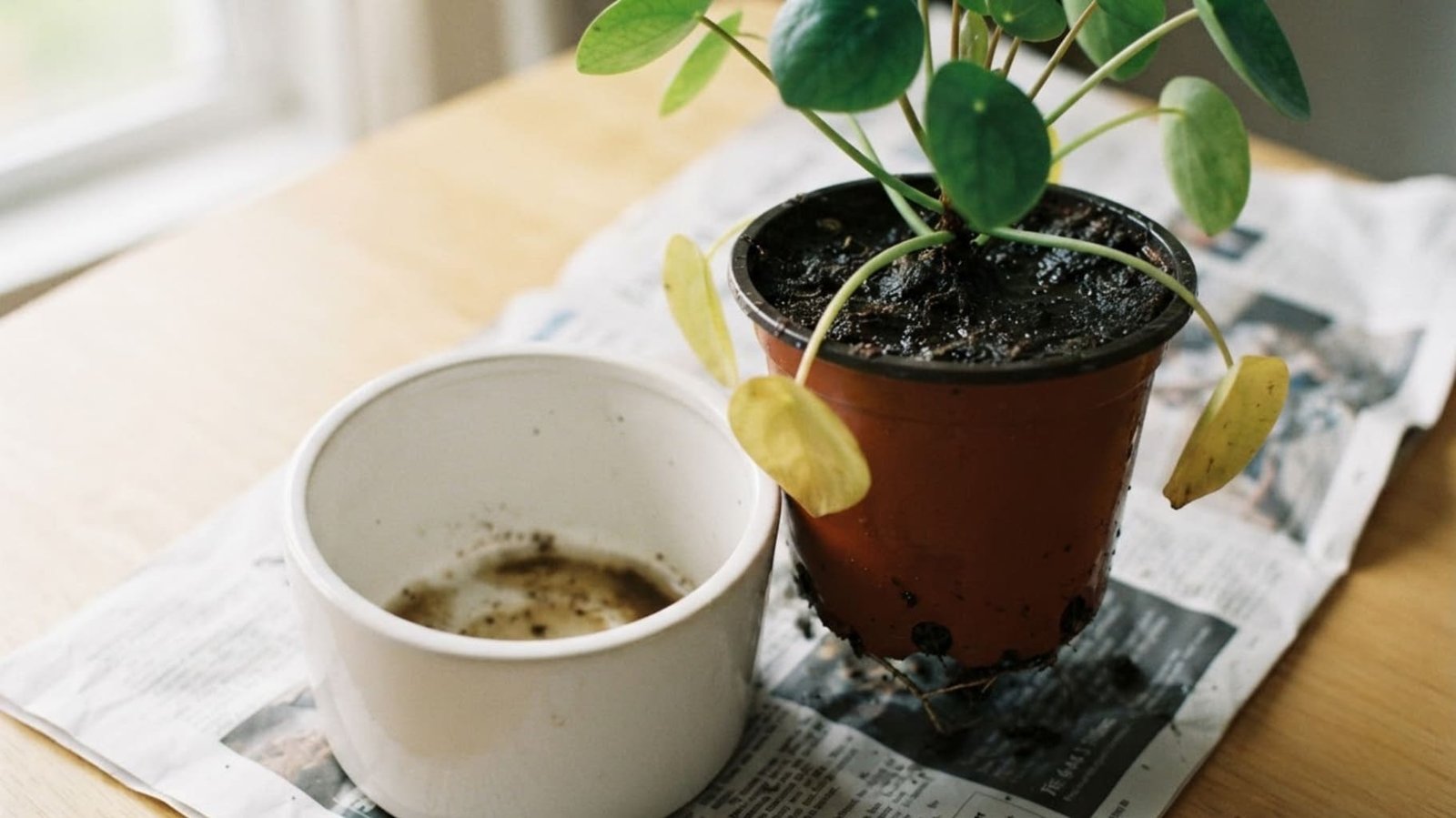
🚑 The short version
To save an overwatered plant: stop watering immediately, lift it out of any decorative pot or standing water, tip it out and check the roots, cut away anything brown and mushy with clean scissors, repot into fresh dry well-draining mix in a pot with drainage holes, and then leave it alone in bright indirect light without water or fertiliser for several days. Most plants caught early recover. The ones that do not are the ones where the roots had already rotted through before anyone noticed.
The cruel part of overwatering is that it looks exactly like thirst. A drowning plant wilts, droops and drops leaves — the same signals a dry plant sends — so the natural response is to water it again, which is what finishes it off. More houseplants die this way than from any other cause, and almost all of them were being cared for attentively at the time.
So the first job is not the rescue. It is being certain that overwatering is what you are dealing with.
🚨 Is it actually overwatered?
Both problems produce a limp, sad-looking plant. Everything else about them is different:
| Check | Overwatered | Underwatered |
|---|---|---|
| Soil | Damp or wet, days after watering | Bone dry, often shrunken from the pot sides |
| Pot weight | Heavy | Noticeably light |
| Leaves | Soft, limp, sometimes translucent | Dry, crisp, papery |
| Yellowing | Lower and inner leaves first | Edges and tips first |
| Leaf drop | Falls while still soft and green-yellow | Goes crisp and clings on |
| Stem base | Soft, sometimes brown or mushy | Firm |
| Soil surface | White mould, green algae, or fungus gnats | Nothing, or dust |
| Smell | Sour, swampy, like stagnant water | Nothing unusual |
Two extra confirmations worth ten seconds each. Fungus gnats — small black flies rising off the soil when you move the pot — breed only in permanently damp soil, so they are near-proof of overwatering. And a sour smell at the soil surface means anaerobic conditions in the root zone, which is root rot already under way.
If the leaves are yellowing and you are still not certain which way it points, our guide to why plant leaves turn yellow works through all seven causes with the tell that separates each one.
🔧 The six steps, in order
Do these in sequence and do not skip step six, which is the one people get wrong.
- 1. Stop watering. Obvious, and still the step people undo three days later out of anxiety. Do not water again until the soil is dry two inches down, however long that takes.
- 2. Get it out of standing water. Lift the nursery pot out of any decorative outer pot, tip out the saucer, and do not put it back until the plant has recovered. A pot sitting in water cannot drain, and no other step works while that is true.
- 3. Move it somewhere bright, but not into direct sun. Light drives the drying, and a stressed plant with damaged roots cannot cope with hot direct sun on top of everything else. Bright indirect light and moving air. A fan on low across the room genuinely helps.
- 4. Check the roots. If the leaves are still firm and only the soil is wet, you can often stop here and simply let it dry. If leaves are yellowing and dropping, or the stem base feels soft, tip the plant out and look — the next section covers what you are looking at.
- 5. Repot into fresh dry mix. Waterlogged soil has lost its air pockets and will not recover its structure. Shake off as much of the old wet soil as comes away easily, and repot into fresh dry well-draining mix in a pot with real drainage holes. If the roots have shrunk, go down a pot size — a big pot holding a small root system stays wet for weeks.
- 6. Then leave it alone. No water for several days after repotting. No fertiliser for at least a month. No moving it around. A recovering plant needs stable, boring conditions, and the single most common way people lose a plant they have just correctly treated is by continuing to fuss over it.
One thing not on the list: do not prune healthy foliage “to reduce stress” unless you removed a substantial share of the roots. Leaves are how the plant rebuilds. If you did cut away a lot of root, then yes — remove a roughly matching proportion of the top growth so what is left can support it.
🌱 Reading the roots

Tip the plant out sideways, supporting the stem base, and ease the soil away with your fingers. What you find falls into three cases:
| What the roots look like | What it means | What to do |
|---|---|---|
| Pale cream or white, firm, springy | Healthy — you caught it in time | Repot in dry mix, resume normal watering when dry |
| Mostly firm, a few brown and soft | Early root rot | Cut off the affected roots, repot, hold off water for 3–4 days |
| Brown or black, soft, falling apart, smelly | Advanced root rot | Cut back to firm tissue only. Recovery is possible but not likely |
| Nothing but mush, stem soft at the base | Too late | See the section below on what to salvage |
Use scissors or secateurs wiped with rubbing alcohol between cuts, and cut back to tissue that is firm and pale. Rinsing the remaining roots under a gentle tap removes rot spores clinging to them, which is worth doing when the rot was extensive.
You do not need a fungicide for a normal case of houseplant root rot. Removing the rotted tissue, giving the roots air, and letting the soil dry properly deals with the great majority of it. The rot was caused by the conditions, so fixing the conditions is the treatment.
🕐 What recovery actually looks like
Expect it to look worse before it looks better, and expect nothing to happen for a while. That is normal and it is not a reason to intervene again.
| When | What you should see | What to do |
|---|---|---|
| Days 1–3 | Still limp, possibly more leaf drop | Nothing. No water |
| Week 1 | Drooping stops, existing yellow leaves may still fall | Check soil; water only if dry 2 in down |
| Weeks 2–4 | No visible change at all — this is the normal, worrying phase | Keep conditions stable. Still no fertiliser |
| Weeks 4–8 | New growth appears — the only real proof it worked | Resume normal watering. Feed at half strength |
Leaves that already yellowed will not turn green again, and there is no point waiting for them to. Once a leaf is more than about half yellow, remove it — it is no longer feeding the plant and it attracts pests and fungus.
💀 When it is past saving
Sometimes it is over before you opened the pot. The plant is beyond recovery when the stem is soft and brown at soil level, when the root ball is entirely mush with no firm tissue anywhere, or when the whole plant lifts out of the soil with almost no roots attached at all.
At that point the useful move is to salvage rather than to treat. Look for any stem section that is still firm and green, cut a healthy cutting above a node with clean scissors, remove the lower leaves, and root it in water or damp propagating mix. Pothos, philodendron, monstera, tradescantia and most trailing plants root very readily this way, and you end up with the same plant rather than a lost one.
If nothing firm is left, throw the soil out too rather than reusing it, and wash the pot with hot soapy water before it holds another plant. And treat it as information rather than failure — nearly everybody kills a plant this way once, and almost nobody does it twice.
🔁 Stopping it happening again
- Check before every watering. Finger two inches into the soil. Dry means water, damp means wait. This one habit prevents almost every case.
- Never water on a fixed day. A calendar does not know how much light your plant got this week. Use a reminder to check, not to pour.
- Drainage holes, always. If you love a pot with no holes, keep the plant in its plastic nursery pot inside it and lift it out to water.
- Empty the saucer 30 minutes after watering. Standing water is the most common single cause.
- Halve the frequency in winter. Growth slows, water use drops, and carrying a summer routine into December is the classic route to root rot.
- Match the pot to the plant. An oversized pot holds more wet soil than the roots can drink, and stays wet for weeks.
Watering interval by species — including which plants tolerate this and which do not — is covered in how often to water plants, with a table of twenty common plants split by season.
📱 The habit that prevents it
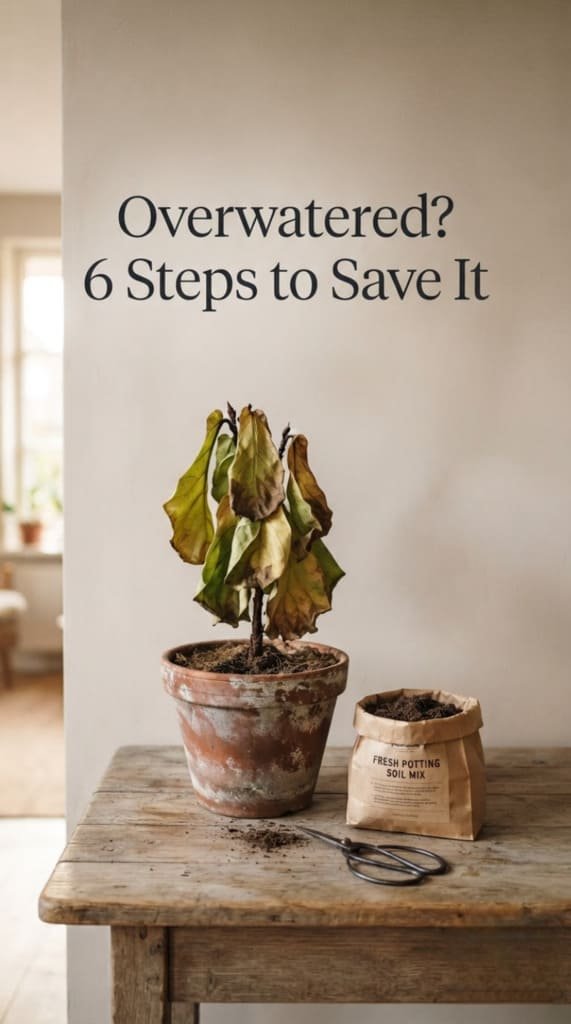
Overwatering is almost always a scheduling problem rather than a knowledge problem. People water on the day they remember, not on the day the plant needs it, and the gap between those two is where root rot lives. Garden DremiAI identifies each plant from a photo and builds its watering interval from the species and from where it lives — indoor, balcony or backyard — then shifts that interval as the seasons change instead of repeating a summer routine into winter.
It also means you know what the plant actually is, which is half of any diagnosis: a fern and a succulent showing identical drooping need opposite responses. Free on iPhone and Android, first plants free, no account needed.
Read next: why plant leaves turn yellow · brown tips on plant leaves · how often to water plants · how a plant identifier app works
❓ FAQ: overwatered plants
Q: How do I save an overwatered plant? A: Stop watering, lift it out of any decorative pot or saucer so it can drain, move it to bright indirect light with moving air, then tip it out and check the roots. Cut away anything brown and mushy with clean scissors, repot into fresh dry well-draining mix, and leave it without water or fertiliser for several days.
Q: Can an overwatered plant recover on its own? A: Sometimes, if it was caught early and the roots are still firm — simply letting the soil dry out fully is enough. If leaves are yellowing and dropping or the stem base feels soft, the roots are already affected and drying alone will not fix it. At that point you need to repot.
Q: How long does an overwatered plant take to recover? A: Drooping usually stops within a week, then typically nothing visible happens for two to four weeks, which is normal and not a reason to intervene. New growth is the only real proof of recovery and usually appears between four and eight weeks. Existing yellow leaves never turn green again.
Q: Should I repot an overwatered plant straight away? A: Only if the roots are affected. If the leaves are still firm and just the soil is wet, let it dry out instead — repotting adds a second stress. If leaves are yellowing and dropping, or you find brown mushy roots, repot immediately into fresh dry mix, because waterlogged soil will not recover its structure.
Q: What does root rot look like? A: Healthy roots are pale cream or white, firm and springy. Rotted roots are brown or black, soft, fall apart when touched, and often smell sour. Cut back to firm pale tissue with scissors wiped in rubbing alcohol, and remove every affected root — rotted tissue does not recover and spreads if left.
Q: Should I use a fungicide for root rot? A: Usually not for ordinary houseplant root rot. Removing the rotted roots, repotting into fresh dry well-draining mix and letting the soil dry properly between waterings deals with the large majority of cases. The rot was caused by the conditions, so correcting the conditions is the treatment.
Q: Can I still save my plant if all the roots are rotten? A: Not the plant as it stands, but often the plant itself. Look for any stem section still firm and green, cut a healthy cutting above a node, remove the lower leaves and root it in water or damp propagating mix. Pothos, philodendron, monstera and most trailing plants root very readily this way.
🧑💻 About the Author
Garden DremiAI — AI plant care & yard design
Written by the maker of Garden DremiAI, an independent studio. We built the app’s watering reminders after seeing how consistently overwatering beats neglect as a cause of plant loss, and the diagnostic order on this page is the same one the app applies. This covers common houseplants and container plants; for a valuable or unusual specimen, or a suspected disease rather than a watering problem, consult a professional.
Questions: support@gardenyarddesign.com