Small Backyard Ideas: 12 Layouts That Make a Yard Feel Bigger
Small yards rarely fail because they are small. They fail because they were divided up.
Garden DremiAI: AI Yard & Landscape Design
📦 One job, not four
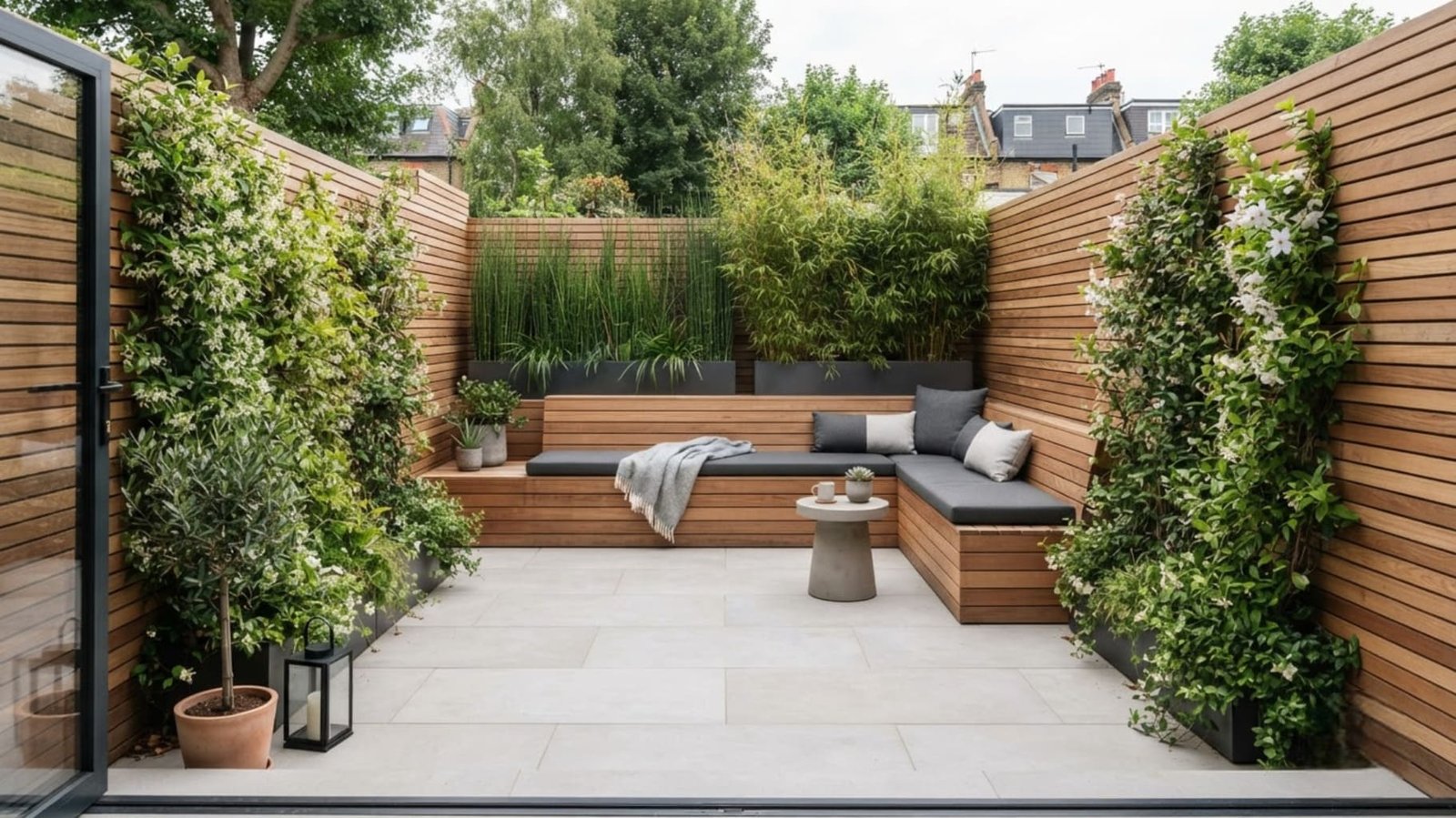
A small backyard feels bigger when it does one thing well rather than four things badly. The most common mistake is subdivision — a little lawn, a little patio, a narrow border, a path between them — which turns one modest space into four tiny ones and makes the whole yard read as cramped. Give the space a single purpose, run one surface wall to wall, and take the planting upward instead of outward.
Ask what the yard is for before you ask what it should look like. Dining? Sitting in the sun? Somewhere for the kids? Plants? In a large yard you can have all four. In a space under about forty square metres you get one, plus a bit of a second, and pretending otherwise is what produces those yards where everything is slightly too small to use.
🔍 Five tricks that make a small yard read bigger
- Turn the layout on the diagonal. The longest line across any rectangle is its diagonal — not its length. Rotating a terrace or deck by forty-five degrees literally gives the eye further to travel, and it breaks the boxy fence-parallel-to-paving-parallel-to-house effect that makes small yards feel like a room with the roof off.
- One surface, wall to wall. Every change of material draws a line, and every line chops the floor into smaller pieces. Run a single paving or decking right up to the boundaries and the ground reads as one continuous area. This is the single highest-impact decision in a small yard.
- Go up, because up is free. Floor space is the scarce resource; wall and fence space is not. Climbers, wall-mounted planters, tall narrow shrubs and a multi-stem tree give you volume of greenery without spending a single square foot of the area you sit in.
- Hide where the space ends. A pale fence announces the boundary; a dark one recedes and disappears behind planting. Paint or stain fences in a deep charcoal, near-black or forest green, then plant in front of them. The eye stops looking for the edge, and the yard reads as continuing.
- One big plant beats ten small ones. Scale contrast is what makes a space feel generous. A single well-placed multi-stem tree or one large architectural plant does far more than a scattering of small pots, which read as clutter and need watering every day of summer.
Garden mirrors get recommended a lot for small spaces. They do work visually, but position them carefully and avoid large unbroken reflective panels facing open planting — birds fly into them. Angled, partly screened by foliage, and away from a flight path is the safer approach.
🗺️ Twelve small backyard layouts
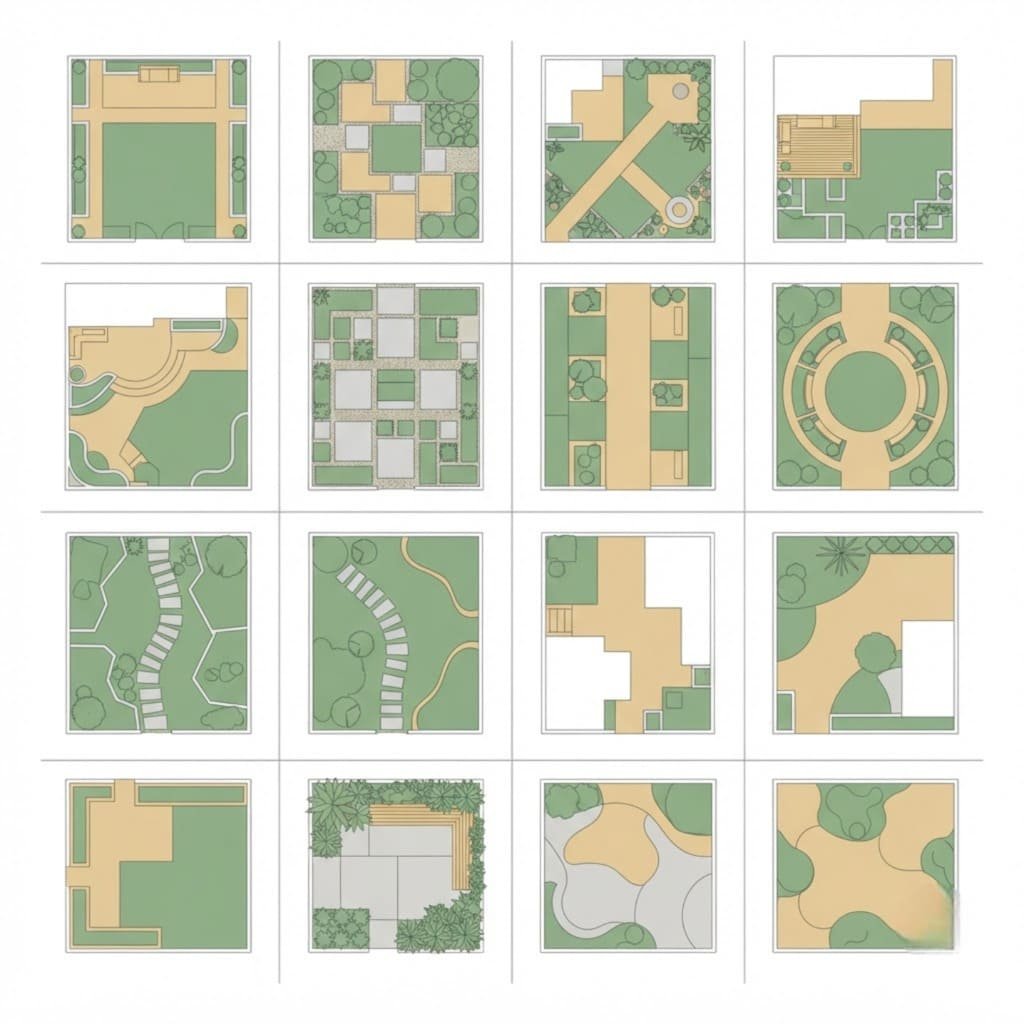
| Layout | What it is | Works best when |
|---|---|---|
| 1. Full terrace | The whole yard paved, planting only against the boundaries | Very small, shady, or nothing will grow underfoot |
| 2. Corner room | Seating in one corner, planting wrapped in an L around it | Square yards with sun in one corner |
| 3. Diagonal deck | Deck or terrace rotated 45° to the house | Square yards that feel boxy |
| 4. Long walk | Path down one side, deep planting down the other | Narrow side returns and passages |
| 5. Two stops | Small terrace at the door, a destination seat at the far end | Long, narrow yards |
| 6. Sunken seat | Built-in bench set below the main level | Yards that already slope |
| 7. Courtyard grid | Formal square: four beds around a centre point | Square plots and period houses |
| 8. Green room | Deep planting on three sides, a small paved centre | You care more about plants than seating |
| 9. Studio end | Garden building at the far end, terrace in front of it | You need an office or real storage |
| 10. Water end | Plunge pool, rill or pond along the far boundary | Warm climates, sheltered yards |
| 11. Dining only | One table, no lawn, planting on every side | You entertain and never mow |
| 12. Kids first | One clear open surface, storage screened at one end | Young family, needs to change in five years |
✂️ What a small yard cannot afford
| Cut this | Because |
|---|---|
| A token lawn | Grass under about 20 m² wears to mud, needs a mower you must store somewhere, and rarely looks good. Either commit to a proper lawn or drop it entirely. |
| A second surface material | Every join is a line, and every line makes the floor smaller. |
| Storage in three places | A shed and a bench box and a bin corner eats the yard. Pick one storage move and screen it properly. |
| Curved bed edges | Curves are lovely in large gardens. In small ones they cut the corners off the usable floor. |
| A collection of small pots | Visual clutter, and daily watering in summer. Fewer, larger containers do more with less work. |
| A separate path | In a small yard the terrace is the path. A dedicated route through it is space spent on walking. |
Before spending anything, work out what the space is actually for — the method is in the six questions to answer before designing a yard. In a small yard those answers matter more than in a large one, because there is no room to be wrong twice.
📱 Small yards test best in a photo
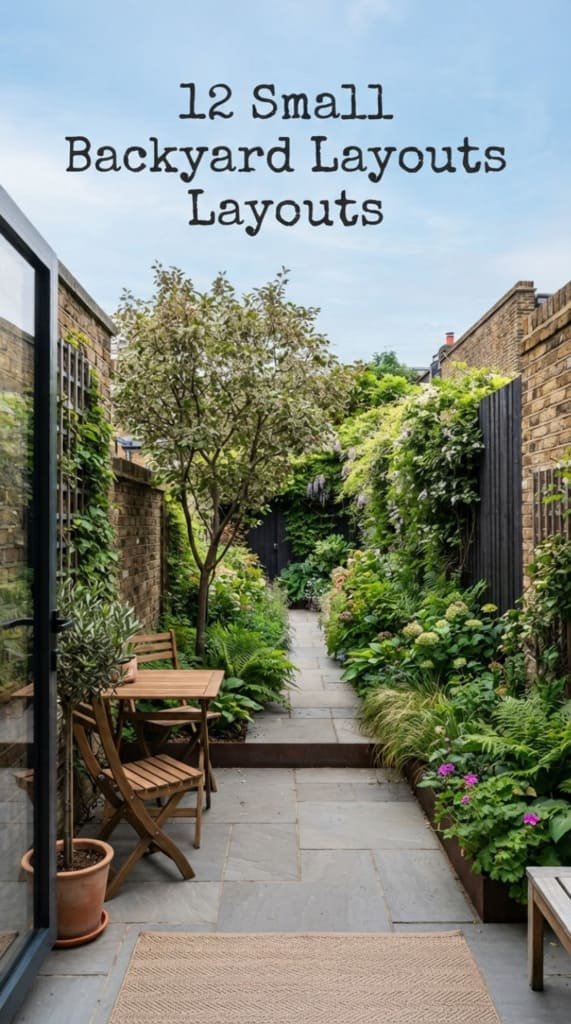
Small yards are the easiest spaces to test, because the whole thing fits in one frame. Stand at the back door, take a single landscape photo, and Garden DremiAI redesigns that exact space in about thirty seconds — your fences, your walls, your real proportions.
Two things worth trying that are hard to picture any other way: run the same photo with a dark fence and a pale one, and run it with a single surface against a divided one. The difference in how large the yard reads is usually larger than people expect, and both are cheap decisions to get right. Free on iPhone and Android, first design free, no account needed.
Read next: the full AI backyard design guide · patio sizes and materials · before and after from one photo
❓ FAQ: small backyards
Q: How do I make a small backyard look bigger?
A: Use one surface across the whole floor, turn the layout on the diagonal, paint the fences a dark colour and plant in front of them, and take greenery upward rather than outward. Above all, resist dividing the space into separate zones.
Q: Should a small backyard have a lawn?
A: Usually not. Below roughly twenty square metres, grass wears through where people walk, stays damp in shade, and requires a mower you then have to store. Paving, decking or gravel with generous planting almost always works better.
Q: What is the best layout for a small backyard?
A: Whichever one matches the single job you want the space to do. Corner seating suits square yards, a two-stop layout suits long narrow ones, and a full terrace suits very small or shady spaces. Choose one and commit to it.
Q: What colour should I paint a small yard fence?
A: Something dark — deep charcoal, near-black or a dark forest green. Dark boundaries recede and let planting stand forward, while pale fences draw a bright line around the edge and announce exactly how small the space is.
Q: Can I have a tree in a small backyard?
A: Yes, and you probably should — one tree makes a small yard feel generous in a way nothing else does. Choose a small or multi-stem species, check its mature spread rather than its size in the pot, and keep it clear of drains and foundations.
Q: Is a small backyard cheaper to renovate?
A: Less material, yes — but not proportionally cheaper. Access is often the problem: if everything has to be carried through the house, labour costs rise sharply. Get that checked before assuming a small yard means a small quote.
Q: Does AI design work on small yards and courtyards?
A: Very well, because the whole space fits in a single photo and the AI can see every boundary. Small yards and courtyards often produce the clearest and most convincing results of any space type.
🧑💻 About the Author
Garden DremiAI — AI yard design & plant care
Written by the maker of Garden DremiAI, an independent studio. Small spaces are the ones users photograph most, and the pattern in those uploads is consistent: the yards that look cramped are almost never the smallest ones, they are the ones cut into four pieces.
Questions: support@gardenyarddesign.com