AI Front Yard Design: Curb Appeal From Your Own Photo
The only part of your home that strangers judge — and the five things they actually notice.
Garden DremiAI: AI Yard & Landscape Design
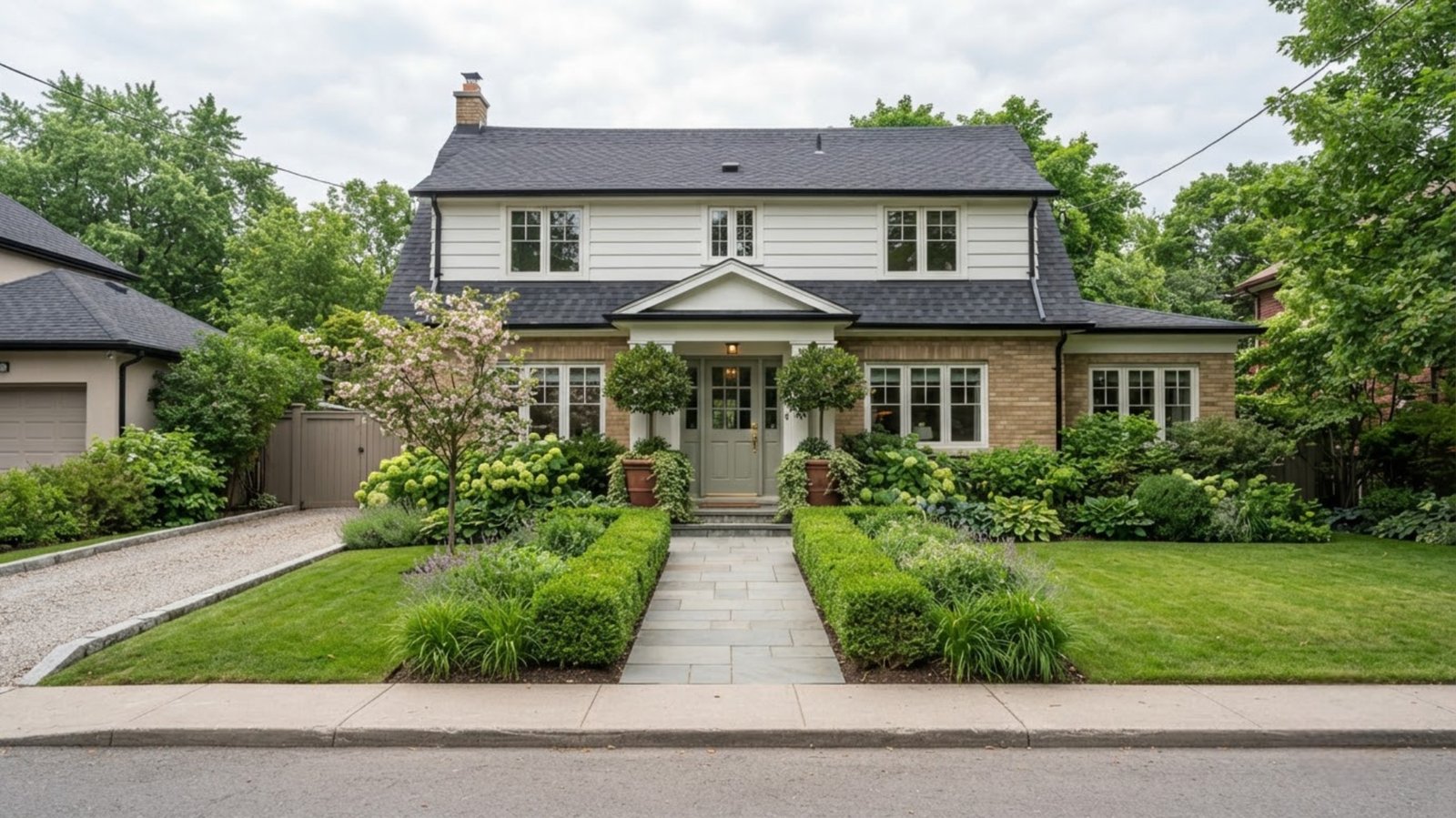
🏠 The yard you never sit in
AI front yard design takes a photo from the street and shows your house with new planting, paths and boundaries — usually in about 30 seconds. But a front yard is not a small backyard. You do not relax in it, you are seen in it. It works 365 days a year, in every season, mostly from a distance of thirty feet, and its job is to make the house look cared for. That single difference changes almost every decision.
A backyard can afford a scruffy February. Nobody sees it. A front yard is on display through the entire dead half of the year, viewed by every neighbour, delivery driver and — eventually — every buyer who pulls up outside. Design it for the worst month, not the best one.
👀 The five things people actually register
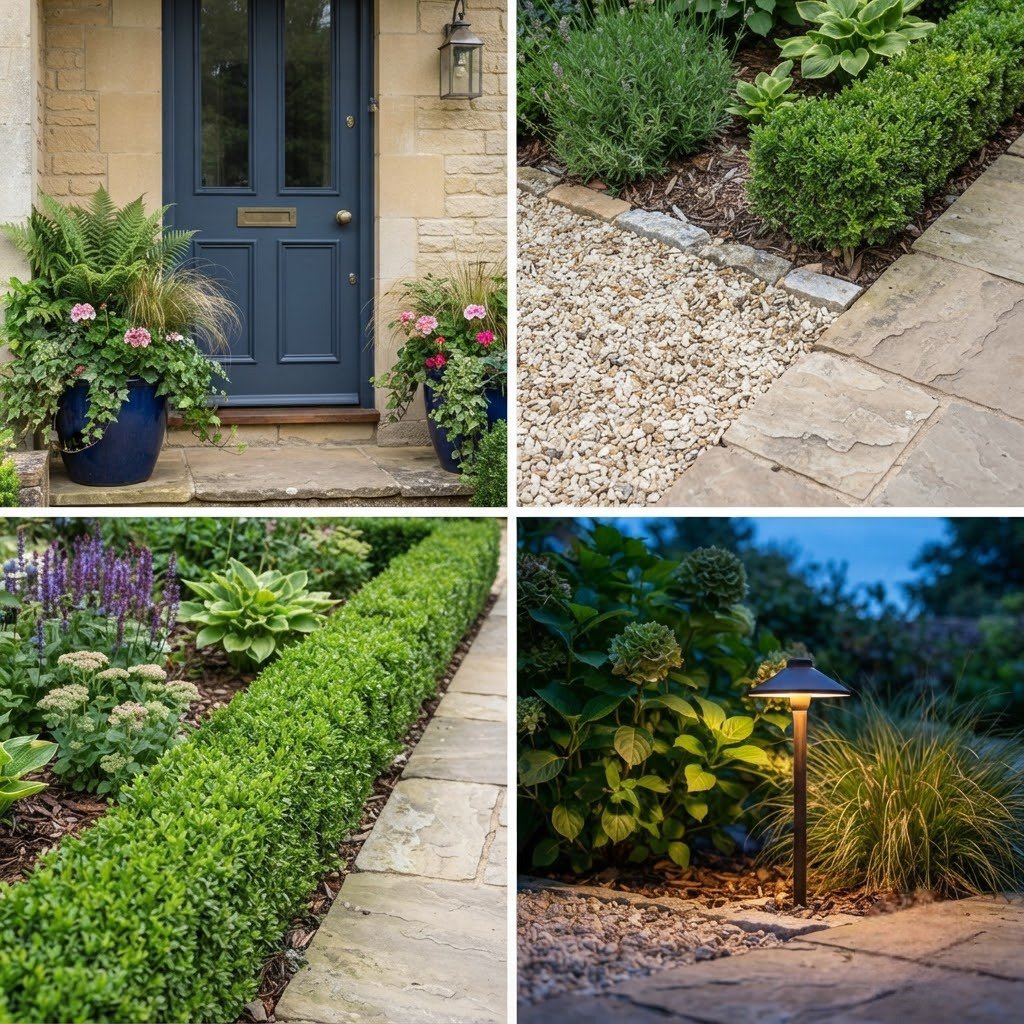
Nobody standing at the kerb inventories your planting. They take in a handful of things almost instantly and form an impression from those. Spend your money here:
| What they see | What it signals | Cheapest fix |
|---|---|---|
| The front door | The whole house, honestly. It is where the eye lands first. | Repaint it. Nothing else comes close per dollar. |
| The path to it | Whether the house is looked after | Clean it, then straighten and re-edge the sides |
| The boundary | Where your property begins — or that it has no edge at all | A low clipped hedge or a single defined line |
| The driveway edge | Usually the largest surface, and usually ignored | A hard edge and planting to break the expanse |
| One large plant | Maturity and permanence | One good multi-stem tree beats twenty small shrubs |
One trick worth more than it costs: symmetry works harder at the front than the back. Most house facades are broadly symmetrical, so a matched pair of anything either side of the door — planters, standard shrubs, lights — reads as deliberate instantly, from a distance, with no skill required. It is the fastest way to make a front yard look designed rather than accumulated.
🌲 Front yards need bones, not flowers
This is where most front yards go wrong, and where AI renders mislead hardest. A generated image shows everything flowering at once, in perfect June light. Your front yard also has to exist in November, and in November flowers are gone and only structure remains.
A rough split that holds up well in a front garden:
| Share | What it is | Its job |
|---|---|---|
| 60% | Evergreen structure — clipped shapes, low hedging, an evergreen shrub or two | Holds the design together every single day of the year |
| 30% | Reliable filler — grasses, foliage perennials, things with a long season | Softness and movement without demanding attention |
| 10% | Seasonal colour — bulbs, a flowering shrub, pots by the door | The moment of interest. Small on purpose. |
There is a practical second reason. Front yards are usually the least-watered, least-visited part of a property — nobody wanders out there with a hose on a hot evening. Structure survives that neglect. Thirsty flowering borders do not, and a struggling front border looks worse than no border at all. If any species in your render is unfamiliar, check it properly before buying; the method is in the guide to AI garden design generators.
🏷️ What adds value, and what just costs money
Ignore anyone quoting a precise percentage return on landscaping — it swings wildly by market and by year. What agents say consistently is simpler and more useful: curb appeal rarely raises the ceiling on a price, but poor curb appeal reliably lowers the floor. A tired front yard makes buyers arrive expecting problems, and they find them.
| ✅ Worth doing | ⚠️ Think twice |
|---|---|
| Repainting the door and cleaning the path | Anything highly personal in taste |
| Defining a clear boundary line | Water features at the front — maintenance, safety, noise |
| One good tree, well placed | Fast-growing screening that becomes a dispute later |
| Repairing or re-edging the driveway | Paving the entire front yard for parking |
| Low-voltage lighting | Elaborate borders a buyer must maintain |
| Tidy, visible house number | Structures that may need permission |
🚧 What you may not be allowed to do
Front yards carry restrictions that back gardens simply do not, because they touch the public street. An AI render knows none of them. Check these before you commit:
- Boundary height limits. Walls, fences and hedges facing a road are commonly capped lower than those at the back. The exact figure varies — look up your local rule rather than copying a neighbour.
- Sightlines at the driveway. Planting near where a car pulls out is often restricted in height for visibility. This is a safety rule and worth respecting even where it is not enforced.
- The street tree is probably not yours. Trees on the verge between path and road usually belong to the municipality, and pruning or removing one without permission can be an expensive mistake.
- HOA and neighbourhood rules. Where they apply, they can govern lawn, plant palette, fencing, paint colour and lighting. Read them before you generate a single design, not after.
- Easements and services. Front yards are where water, gas, power and telecoms enter the property. Find them before planting a tree, and keep permanent structures away from access covers.
- Hard surfacing and drainage. Converting a garden to parking increasingly requires permission or permeable construction. Worth a phone call before ordering materials.
🌙 Lighting is the cheapest upgrade there is
For half the year your front yard is seen in the dark more often than in daylight — arriving home, leaving for work, every visitor after five. Lighting is the one upgrade that changes that half entirely, and low-voltage or solar kits are within reach of a confident afternoon.
- Uplight one tree. A single light at the base of a good tree does more for a front yard after dark than a dozen small fittings anywhere else.
- Light the door, not the doorway. A warm light near the entrance says welcome. A bright floodlight aimed outward says security camera.
- Avoid the runway. Evenly spaced path lights marching in two lines is the most common mistake. Stagger them, use fewer, and let some of the path stay dark.
- Stay warm and low. Warm-toned light flatters brick, render and planting. Cold white light makes a house look institutional at night.
If the front path or driveway itself needs replacing rather than lighting, the sizing and drainage rules are the same as any other hard surface — see the guide to patio and hardscape design.
📱 Photograph it from the street
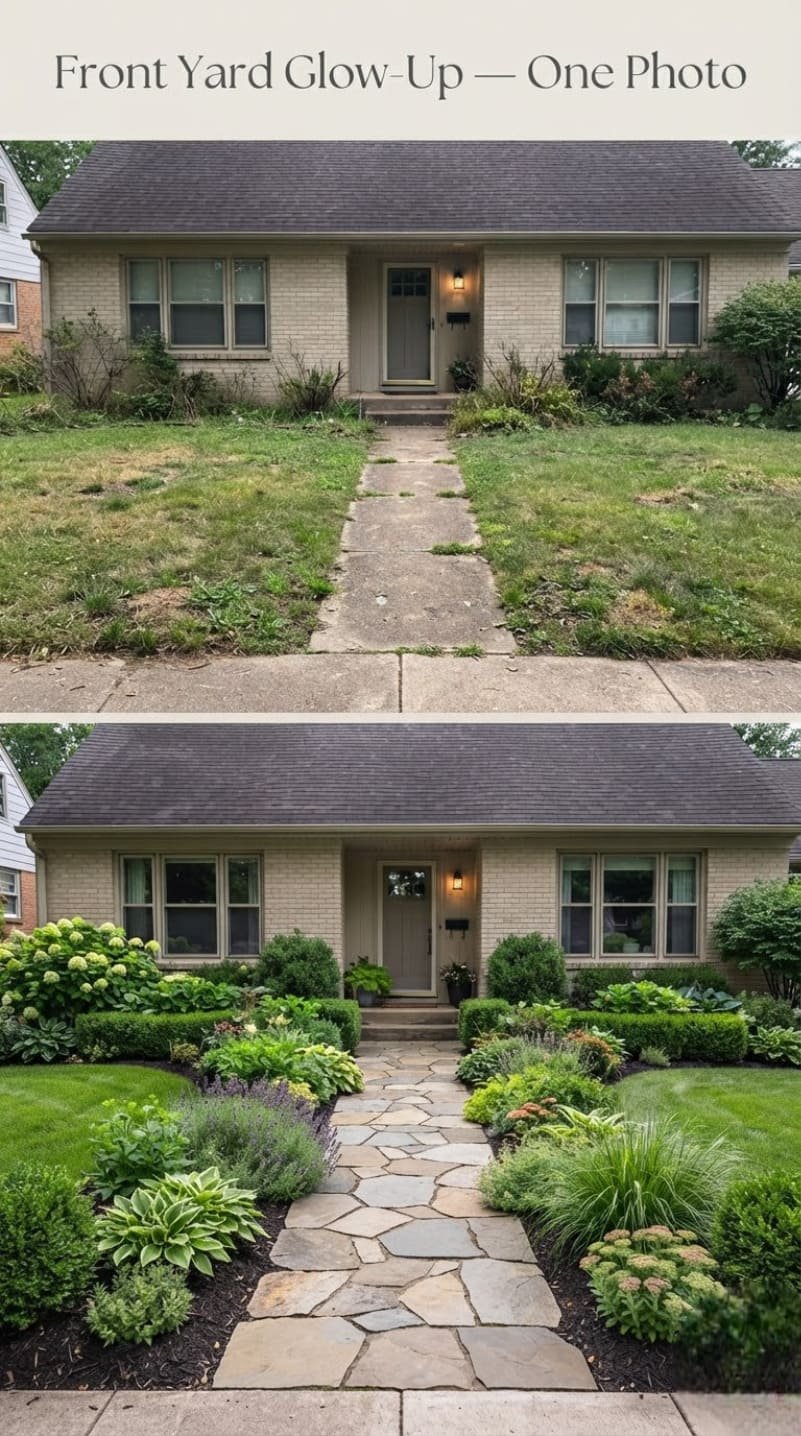
Stand where a visitor would stand — at the kerb, facing the door — and take one landscape photo with the whole house front and both boundaries in frame. Garden DremiAI redesigns that exact view in about thirty seconds, keeping your house, your driveway and your boundary line, so you are looking at your own front yard rather than somebody else’s.
Run three or four styles and check each one against the evergreen test: cover the flowers with your thumb and see whether it still looks like a designed front garden. If it does, it will look right in November too. Free on iPhone and Android, first design free, no account needed.
Read next: the full AI backyard design guide · 6 questions before you design a yard · before and after from one photo
❓ FAQ: front yard design
Q: Can AI design my front yard from a photo?
A: Yes. Photograph the house from the kerb in landscape orientation with both boundaries in frame, choose a style, and the AI redesigns that view in about 30 seconds while keeping the house, driveway and boundary line.
Q: What is the fastest way to improve curb appeal?
A: Repaint the front door, clean and re-edge the path, and define the boundary. Those three cost very little, take a weekend, and change the impression more than any planting scheme.
Q: Does front yard landscaping increase home value?
A: Treat it as protecting value rather than adding it. Good curb appeal rarely raises the asking price on its own, but a neglected front yard reliably drags offers down and slows a sale, because it sets the buyer’s expectations before they walk in.
Q: What should I plant in a front yard?
A: Mostly evergreen structure, roughly sixty percent, because the front is on show all year including the months when nothing flowers. Add long-season foliage and grasses, and keep seasonal colour to a small share near the door.
Q: Are there rules about front yard fences and hedges?
A: Usually yes. Boundaries facing a road are commonly limited in height, planting near a driveway may be restricted for visibility, and street trees often belong to the municipality rather than to you. Check locally before building or removing anything.
Q: Can I pave the whole front yard for parking?
A: Sometimes, but increasingly it needs permission or a permeable construction, because a fully sealed surface pushes rainwater into the street. It also tends to reduce appeal — a house behind a full slab of paving reads as less cared for, not more.
Q: How do I design a very small front yard?
A: Give it one clear idea. A defined path, a matched pair either side of the door, and a single good plant will outperform a crowded miniature border every time. Symmetry does most of the work in a small frontage.
🧑💻 About the Author
Garden DremiAI — AI yard design & plant care
Written by the maker of Garden DremiAI, an independent studio. Front yards are the one place our renders flatter hardest, because a generated image is always summer and a front garden is mostly not — hence the evergreen test above. Boundary heights, sightlines and surfacing rules vary by location; confirm yours locally before building.
Questions: support@gardenyarddesign.com