Plant Identifier App: Name Any Plant From One Photo (2026)
What these apps genuinely get right, where they fail, and the five photo rules that decide which you get.
Garden DremiAI: AI Plant Care & Yard Design

🔍 What a plant identifier app actually does
A plant identifier app matches a photo of a plant against a trained visual model and returns the most likely species, usually in a few seconds, along with a confidence level and a care summary. On a clear photo of a common houseplant, garden flower or tree, a good one is right most of the time. On a blurry photo, a whole flowerbed, a bare winter stem or an unusual cultivar, it is much less reliable — and the difference is almost entirely down to the photo you gave it, not the app.
That last point is worth sitting with, because it is the thing nobody tells you. People try an identifier app once, get a wrong answer from a photo taken across a garden in poor light, and conclude the technology does not work. The same app, given a single leaf filling the frame in even daylight, will often name the plant correctly on the first try.
So this page is organised around the thing you control. What these apps do well, what they cannot do, how to photograph a plant so it gets the right answer, and what to do when it still gets it wrong.
✅ What it identifies well — and what it doesn’t
Identification accuracy is not uniform. It tracks how distinctive the plant looks and how much of it appears in training data, which means common things are easy and unusual things are hard.
| Type of plant | How reliable | Why |
|---|---|---|
| Common houseplants — monstera, pothos, snake plant, peace lily | Very reliable | Distinctive leaf shapes, and enormous amounts of training data |
| Garden flowers in bloom — roses, tulips, hydrangeas, lavender | Very reliable | Flowers carry the most identifying information of any plant part |
| Trees with visible leaves | Reliable | Leaf shape, edge and arrangement are strong signals |
| Herbs — basil, mint, rosemary, thyme | Reliable | Distinctive foliage, though mint family members get confused with each other |
| Shrubs out of flower | Mixed | Green leaves on a green shrub look like a great many other green shrubs |
| Succulents and cacti | Mixed | Hundreds of near-identical species, and many are hybrids |
| Seedlings | Poor | Almost everything looks the same in its first weeks |
| Bare winter stems | Poor | The identifying features are the ones that have fallen off |
| Named cultivars — a specific rose variety | Poor | Apps identify species; cultivar differences are often too subtle |
Notice what runs through the reliable half of that table: a distinctive, well-lit, in-season plant part. That is the whole game, and it is why the next section matters more than which app you pick.
📸 The five rules that decide the answer
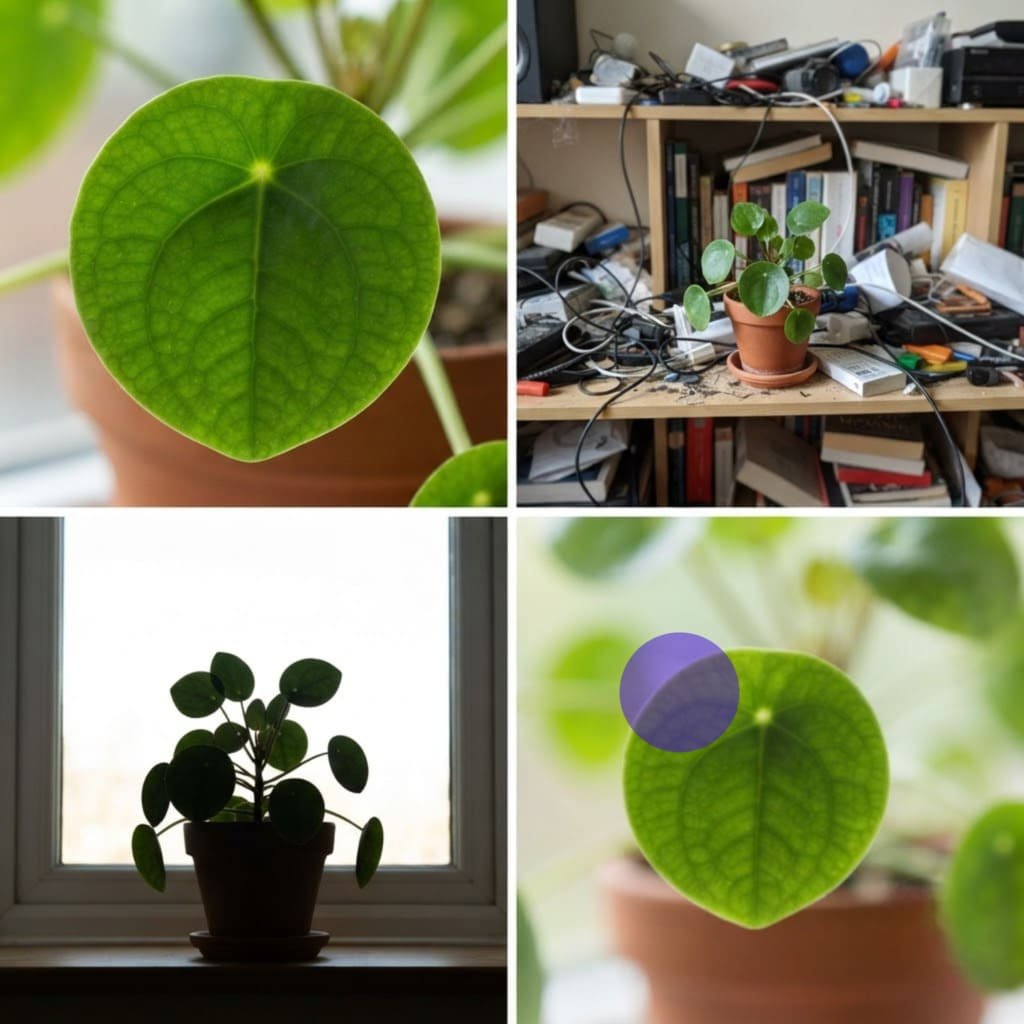
These take about ten seconds to apply and they change the hit rate more than anything else you can do.
- One plant, not a scene. Fill the frame with a single leaf, flower or cluster. A photo of a whole border is a photo of eight plants, and the model has to guess which one you meant. This is the single biggest cause of wrong answers.
- Photograph the most distinctive part. If it is flowering, photograph the flower — flowers carry far more identifying information than leaves. No flower? Take the leaf, straight on, showing its full shape including the edge and the tip. Bark and seed pods are the next best after that.
- Get the light behind you, not behind the plant. Shooting towards a window turns the plant into a dark silhouette and throws away the colour and vein detail the model needs. Bright overcast daylight is close to ideal. Direct midday sun is not — it blows out the highlights.
- Plain background. A hand, a sheet of paper or a plain wall behind the leaf separates it from everything else. Patterned wallpaper and dense foliage behind the subject both cause confusion.
- Focus, and check it before you submit. Tap the screen on the leaf to lock focus. A slightly blurred photo loses the leaf margin — smooth, toothed or lobed — and that margin is often the single feature separating two candidate species.
One more that is worth the extra fifteen seconds: take two or three photos of different parts — a leaf, the flower, and the whole plant showing its habit. Apps that accept multiple images improve noticeably with them, and if yours does not, you can run them one at a time and see whether the answers agree. Two matching answers from two different plant parts is a much stronger result than one answer from one photo.
❌ Why it got it wrong
When the answer is clearly not your plant, it is nearly always one of these — and all but the last are fixable in under a minute.
| What happened | Why | What to do |
|---|---|---|
| Named a completely different plant | The photo held several plants, or the background dominated | Reshoot one leaf filling the frame against a plain background |
| Named a plausible relative but not it | Genus right, species wrong — very common in succulents and the mint family | Photograph the flower if there is one; check the suggested alternatives list |
| Low confidence, several suggestions | Not enough distinctive information in the shot | Add a second photo of a different part of the plant |
| Confidently wrong | Backlit, blurred, or an unusual angle | Reshoot with light behind you and tap to focus |
| Cannot identify at all | Bare stems, seedling, or a damaged specimen | Wait for leaves or flowers — there may genuinely not be enough to go on |
| Right species, wrong variety | Apps identify species, not named cultivars | Accept the species; the care needs are almost always the same |
A quick sanity check that costs nothing: does the answer make sense for where you are and where the plant is growing? An app that names a tropical understorey species growing in an exposed northern European front garden in February has probably matched on leaf shape alone. Context is the one thing you have and the model does not.
🌱 The name is step one — care is the point
Identification on its own is trivia. It becomes useful the moment it turns into a watering interval, because almost everything that goes wrong with a plant comes from treating it like a different plant.
This is where the same photo pays off twice. Once the species is known, so are the things that actually keep it alive: how often it wants water, how much light it needs, whether it wants feeding and when, and whether it wants humidity or hates it. A fern and a succulent sitting side by side on the same shelf need opposite treatment, and watering them both on Sunday morning kills one of them slowly.
| Once you know the plant, you know | Example: peace lily | Example: aloe vera |
|---|---|---|
| Watering interval | Every 5–7 days; droops visibly when thirsty | Every 2–3 weeks; less in winter |
| Light | Bright indirect; tolerates shade | Direct sun, as much as possible |
| Feeding | Monthly in spring and summer | 2–3 times a year at most |
| Humidity | Likes it; misting helps | Dislikes it; misting causes rot |
| Common failure | Underwatering, then sudden drooping | Overwatering, then soft mushy leaves |
It also gets you a straight answer when something goes wrong. Yellowing leaves on a plant you can name are diagnosable in a minute; on a plant you cannot name they are guesswork. Our full guide to why plant leaves turn yellow walks through the seven causes and the tell that separates each one.
⚠️ The one rule: never eat anything on an app’s say-so
Do not use a plant identifier app to decide whether something is safe to eat, safe to touch, or safe for a child or pet to be near. Not this app, not any of them.
Identification apps return a best visual match with a confidence score. That is genuinely useful for naming the plant on your windowsill and completely inadequate as a safety decision, because several of the most dangerous plants have common lookalikes that differ in details a photo will not reliably resolve. Being right nine times out of ten is an excellent result for a houseplant and an unacceptable one for something you are about to swallow.
Use an app for curiosity, gardening and care. For foraging, for a suspected poisoning, or for anything a child or animal has eaten, contact a qualified professional — a poison control centre, a doctor or a vet — and take the plant with you if you can. No app output should ever be the reason you decide something is safe.
📱 Try it on the plant nearest to you
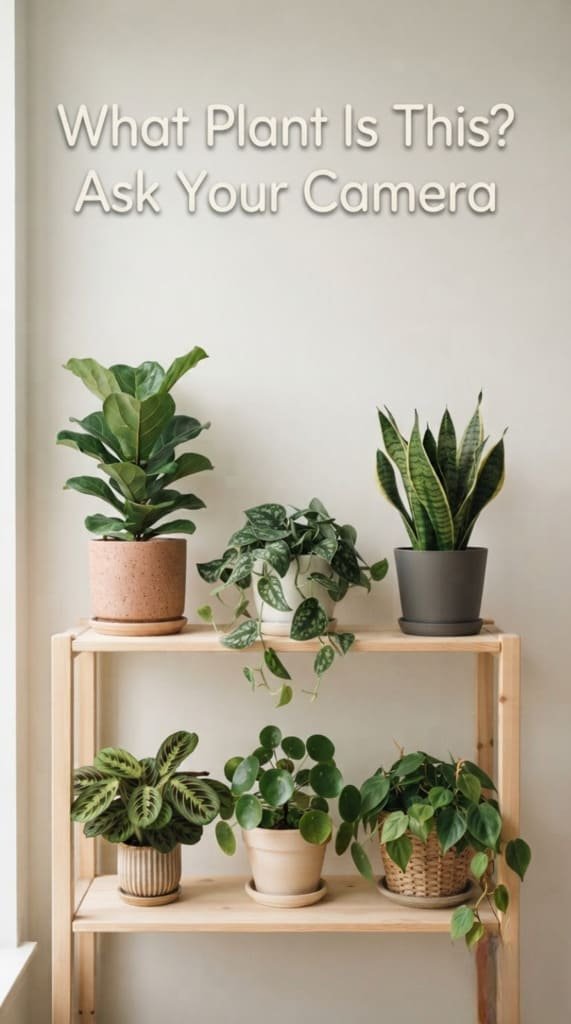
Garden DremiAI names houseplants, garden flowers, trees, shrubs and herbs from a single photo, then does the part that actually matters: it builds a care plan for that specific plant and adjusts it for where the plant lives, because the same species wants different treatment indoors, on a balcony and in open ground.
The whole interface runs on icons and numbers rather than paragraphs — 3d means water in three days — so it works regardless of which language you read in. And it is the same app that redesigns your yard from a photo, so the plants you identify and the garden you are planning live in one place. Free on iPhone and Android, first plants free, no account needed.
Read next: why plant leaves turn yellow · how often to water plants · low-maintenance plants for a backyard · AI backyard design
❓ FAQ: plant identifier apps
Q: What is the best plant identifier app? A: The best one for you is whichever gives accurate results on the plants you actually own, and the photo matters more than the app. Look for three things: it identifies from a single clear photo, it shows a confidence level and alternative suggestions rather than one flat answer, and it gives you care instructions afterwards rather than just a name.
Q: Is there a free plant identifier app? A: Yes. Garden DremiAI is free to download on iPhone and Android and your first plant identifications are free with no account. Most apps in this category work on a free allowance with a subscription for unlimited use — check what the free tier actually includes before you rely on it.
Q: How accurate are plant identifier apps? A: On a clear, well-lit photo of one common plant, a good app is right most of the time, and usually right about the genus even when the exact species is wrong. Accuracy drops sharply on blurred photos, backlit photos, whole flowerbeds, seedlings, bare winter stems and near-identical succulents.
Q: What is the best photo to identify a plant? A: One plant filling the frame, photographed straight on with the light behind you, against a plain background, in focus. Photograph the flower if there is one, because flowers carry the most identifying information. If there is no flower, take a single leaf showing its full shape including the edge and tip.
Q: Can an app identify a plant from a leaf only? A: Often yes, especially for houseplants and trees where the leaf shape, edge and arrangement are distinctive. It is harder for shrubs and succulents, where many species share very similar leaves. A leaf plus a second photo of the whole plant gives a noticeably better result than a leaf alone.
Q: Can it tell me if a plant is poisonous? A: It can tell you what a plant most likely is, and you can look up that species. It cannot make a safety decision for you, and you should never use an app to decide whether something is safe to eat or touch. If someone has eaten an unknown plant, contact a poison control centre, a doctor or a vet immediately.
Q: Does it work offline? A: Identification needs a connection, because the matching runs on a server rather than on the phone. Care plans and reminders for plants you have already saved continue to work offline. If you are out of signal, take the photo anyway and run it when you are back in range.
🧑💻 About the Author
Garden DremiAI — AI plant care & yard design
Written by the maker of Garden DremiAI, an independent studio. We build both halves of this — the identification and the care schedule that follows it — so the photo section above is drawn from watching which submitted photos succeed and which fail. Identification is a best visual match, not a determination: treat it as a strong starting point for care, and never as a safety decision.
Questions: support@gardenyarddesign.com