Design My Yard: 6 Questions to Answer Before You Start
Style is the last decision, not the first. Here is what comes before it — and the build order that stops yard projects stalling halfway.
Garden DremiAI: AI Yard & Landscape Design
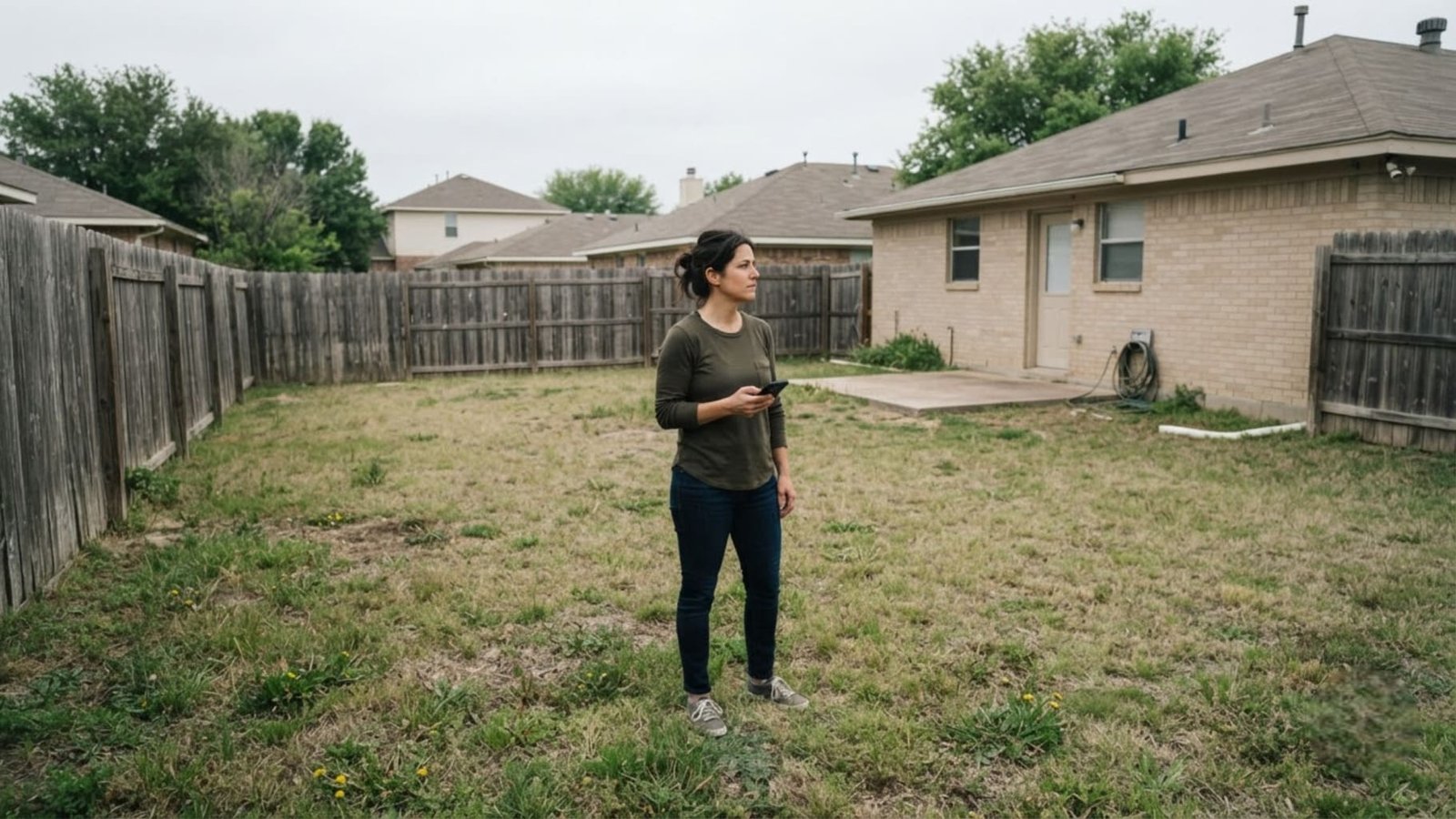
🧠 Start with the brief, not the picture
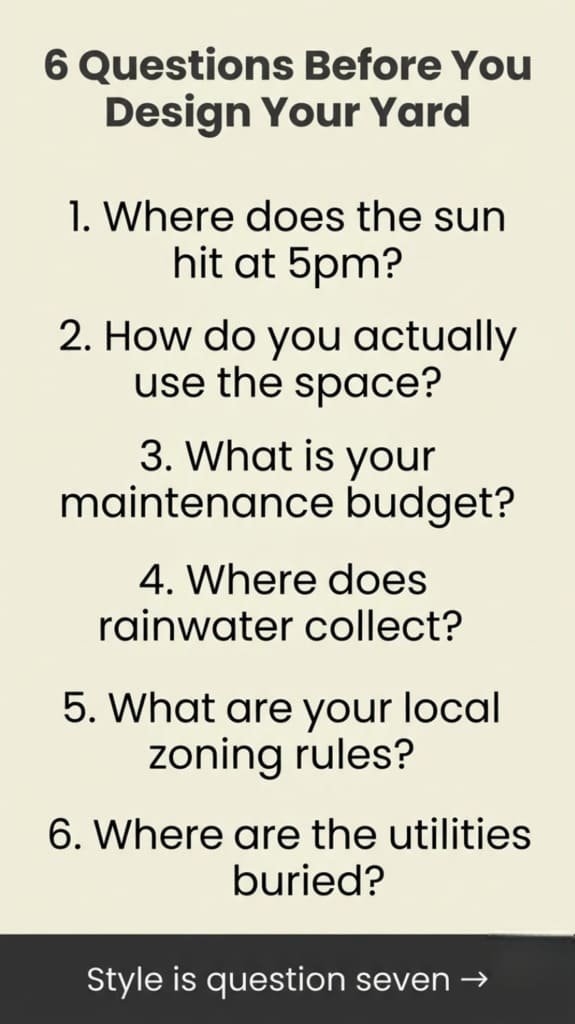
Designing a yard is mostly answering six questions: what you actually do out there, where the sun goes, what has to stay, how much upkeep you will genuinely accept, what the budget is, and what phase one buys. Style is question seven. Almost everyone starts at seven, which is why so many yard projects stall after the first weekend.
A professional designer would spend the first meeting on these questions and never mention a style. They are not glamorous and none of them require software, a tape measure or money. But they are the reason one yard feels effortless to live in and another looks lovely in photographs and gets used twice a summer.
Give this an hour. Sit outside with a drink and work through it properly, ideally with whoever else lives there.
🪑 1. What do you actually do out there?
Not what you imagine doing. What you do. Every activity makes a demand on the space, and most yard mistakes are a demand that was never written down:
| You want to | The yard needs | The usual mistake |
|---|---|---|
| Eat outside | A level hard surface near the kitchen door, big enough for chairs pulled out | Patio built at the far end, where nobody carries plates |
| Sit in the evening | Seating where the last sun falls | Seating placed for the view instead of the warmth |
| Let kids play | One unbroken open area, visible from indoors | Fussy beds cut into the middle of the lawn |
| Keep a dog | A tough route around the perimeter, robust planting | Delicate borders at exactly nose and tail height |
| Grow food | Six-plus hours of sun, water nearby, a dry path to it | Raised beds tucked into the shady corner |
| Store bins, bikes, tools | Screened space on the route to the street | No plan at all — so it colonises the nicest corner |
☀️ 2. Where does the sun actually go?
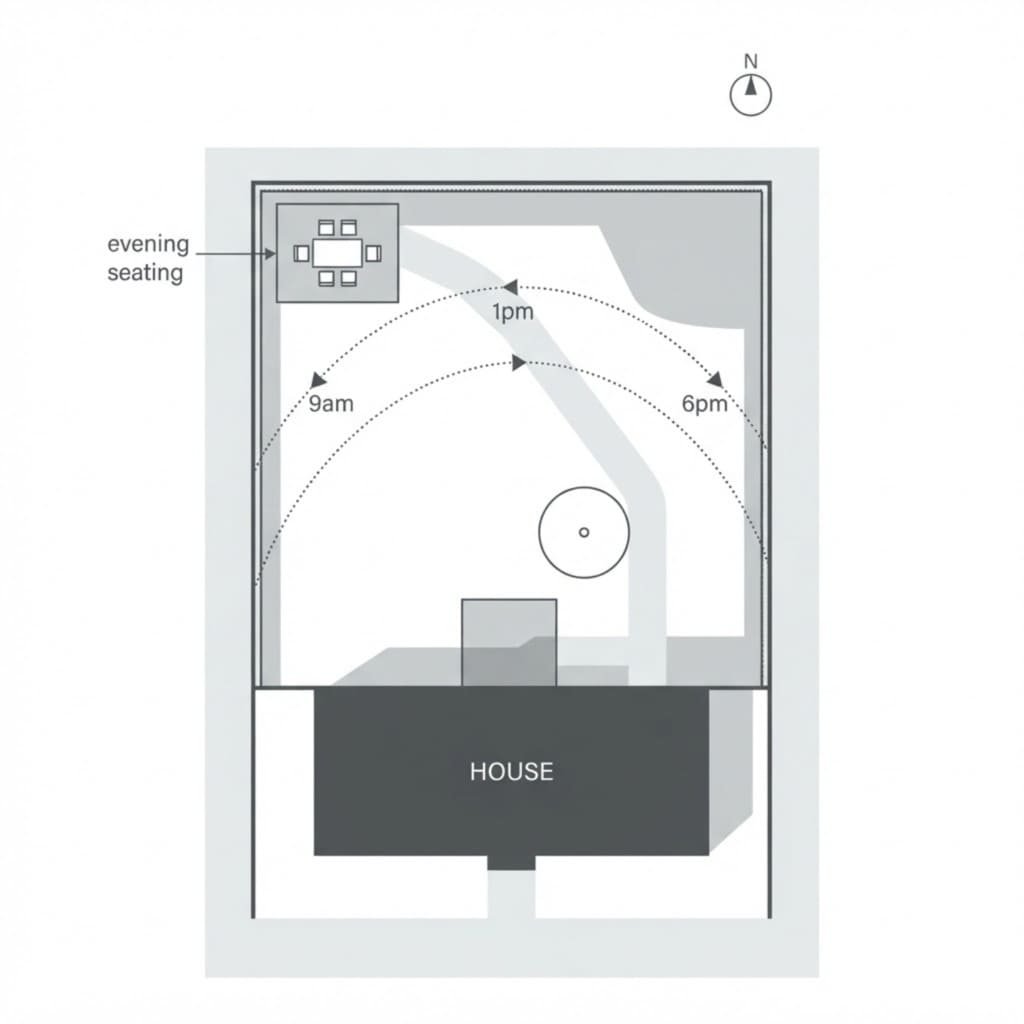
This single hour of observation changes more plans than anything else on the page. Pick one clear day and take a photo of the yard three times — mid-morning, early afternoon, and an hour before sunset. Then look at where the shade actually was.
Nearly everyone puts seating immediately outside the back door, because that is where the door is. But in a great many yards the back of the house is in shadow by late afternoon, and the warm corner at six in the evening is somewhere else entirely — often the spot currently occupied by a shed or a compost heap. Moving the seating to follow the evening sun is free at the planning stage and expensive once the paving is down.
Two things worth noting while you look: which parts never get direct sun at all — that is where shade planting goes, and nothing else will thrive — and how much the picture will change when the trees come into leaf.
🧱 3. What is staying whether you like it or not?
Design is mostly what you do around the things you cannot move. List yours honestly:
- Mature trees. Their roots extend roughly as far as the branches, and you cannot pave or dig freely under them. Some are also legally protected — worth checking before you plan anything near one.
- Levels and slope. A yard that falls more than gently will need steps or a retaining wall, and that is the item most likely to double a budget.
- Where water goes. Watch the yard during heavy rain before you design it. Every new hard surface sends water somewhere, and “somewhere” must not be the house.
- Services underground. Drains, inspection covers, water, gas, electricity. Find them now, not with a spade.
- Boundaries and rules. Fence and structure heights are often capped by local rules, and both neighbours have windows. Check before you screen anything.
- Access. How does a wheelbarrow — or a digger — get in? If the only route is through the house, that changes what is realistic and what it costs.
🧹 4. How much upkeep will you honestly do?
| Feature | What it really asks of you |
|---|---|
| Striped, edged lawn | Weekly mowing through the growing season, plus edging. A relationship. |
| Rough-cut lawn | Every two or three weeks. Far more forgiving, looks fine. |
| Clipped hedging | Two or three cuts a year, on a ladder, with the right tools. |
| Mixed flower border | Something to do most weeks. Rewarding if you like gardening, a burden if not. |
| Gravel and shrubs | A tidy-up a few times a year. The lowest-effort option that still looks designed. |
| Pots and containers | Watering every day in hot weather. The most underestimated commitment in any yard. |
There is no wrong answer here — only a mismatch. A high-maintenance yard chosen deliberately is a hobby. The same yard chosen accidentally is a source of guilt every time you look out of the window.
🧾 5 & 6. The budget, and what phase one buys
Very few people build a whole yard at once, and that is fine — as long as the phases run in the right order. The correct order is the least satisfying one, because it front-loads everything invisible:
| Phase | What happens | Why it goes here |
|---|---|---|
| 0 | Answer questions 1–4. Mark the layout with string and pots. | Free, and prevents almost every expensive mistake. |
| 1 | Anything that involves digging: drainage, levels, cables, water lines. | Invisible and unrewarding — but impossible to add later without tearing up phases 2–4. |
| 2 | Hard surfaces and structures: paving, steps, decking, screens. | These fix the shape of everything else. Get them right once. |
| 3 | Planting: trees and hedges first, borders after. | Trees planted early are years ahead by the time you finish. |
| 4 | Furniture, lighting, pots, the finishing touches. | Cheap, quick, immediately visible. Save it as the reward. |
One trick worth the evening it takes: before committing to any layout, mark it out physically. String lines for edges, pots or cardboard boxes for anything large, a chair placed where the seating will go. Live with it for a week. Spaces feel dramatically different at full size than they look on a screen, and a week of walking around a string line has saved more yards than any drawing.
🎨 7. Now — and only now — pick a style
With the six answers written down, choosing a look becomes a ten-minute job instead of a year of saved images. You already know the space has to hold a table near the door, that the warm corner is at the back left, that the birch stays, that you will not be clipping anything twice a year, and that phase one is drainage.
That brief rules out most styles by itself. For the rest, seeing them applied to your actual yard settles it quickly — the guide to AI backyard design covers how, and the four ways to design a yard online covers which tool suits which stage.
📱 See your brief on your actual yard
Once the brief is written, Garden DremiAI is the fastest way to test it. Take one photo of the yard, choose a style, and see your own space that way in about thirty seconds — your house, your boundaries, your shape. Run the two or three styles your brief allows and the decision usually makes itself.
It will not answer questions one to six — nothing can do that except an hour outside with a notebook. But it turns question seven from a year of indecision into an evening. Free on iPhone and Android, first design free, no account needed.
Read next: the full AI backyard design guide · before and after from one photo · AI garden design generator
❓ FAQ: designing your own yard
Q: How do I start designing my yard?
A: Not with a style. Start by writing down what you actually do outside, watching where the sun falls across one day, listing what cannot move, and being honest about upkeep. Those four answers narrow the design far more than any inspiration folder.
Q: Can I design my own backyard without a designer?
A: For a reasonably flat, straightforward space — yes, very often. Bring in a professional when there are significant level changes, retaining walls, drainage problems, structures needing permission, or anything involving underground services.
Q: What is the cheapest way to transform a yard?
A: Planting along the boundaries, replacing tired lawn with gravel or bark, and adding furniture and lighting. That combination changes how a yard looks and feels more than anything else per unit of money, and none of it requires a contractor.
Q: Do I need to measure before I design?
A: Not to decide the look, but yes before you buy anything. Width, depth, and the position of doors, trees and covers is enough for most projects. Take them once and write them somewhere you will find them again.
Q: How do I design a small or awkwardly shaped yard?
A: Give it one job rather than four, and resist dividing it up — a single generous space reads as larger than three small ones. Diagonals help awkward shapes, and taking planting upward on walls and fences buys greenery without floor space.
Q: Should I build it all at once or in phases?
A: Phases are completely normal, provided anything involving digging happens first. Drainage, cabling and water lines are invisible and unsatisfying, and adding them later means lifting whatever you built on top.
Q: How long should the whole thing take?
A: Longer than you think, and that is not a failure. A yard built over three seasons in the right order almost always ends better than one built in a single frantic month in the wrong one.
🧑💻 About the Author
Garden DremiAI — AI yard design & plant care
Written by the maker of Garden DremiAI, an independent studio. We build the style tool, and this page argues that the style tool is the seventh thing you should reach for — because a beautiful design applied to an unexamined space is how yards end up unused.
Questions: support@gardenyarddesign.com